Home / Past papers / MLT Quiz 1 / this paper
IIT M FOUNDATION AN3 EXAM QPF3 16 JULY 2023 - 16 Jul 2023
Elapsed 00:00





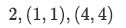
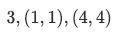


Select all true statements regarding standard PCA applied on a centered dataset.
- The variance of the dataset along the first principal component is maximum.
- The variance of the dataset along the first principal component is minimum.
- The first principal component is the unit norm eigenvector corresponding tothe largest eigenvalue of the covariance matrix.
- The first principal component is the unit norm eigenvector corresponding tothe smallest eigenvalue of the covariance matrix.

- The covariance matrix corresponding to this dataset has 30 non-zeroeigenvalues.
- The covariance matrix corresponding to this dataset has only four non-zeroeigenvalues.
- The residues will become zero after four rounds
- By utilizing four principal component vectors and their correspondingcoefficients, we have the ability to reconstruct the complete dataset using representatives.
Which of the following statements about kernel PCA is/are always true?





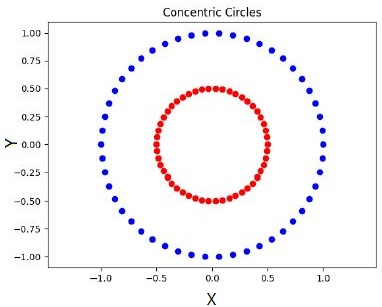
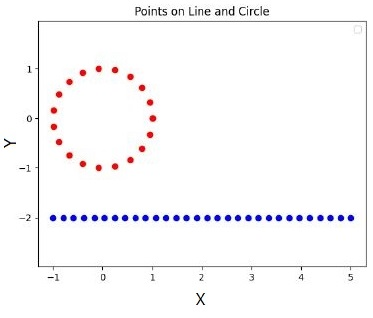
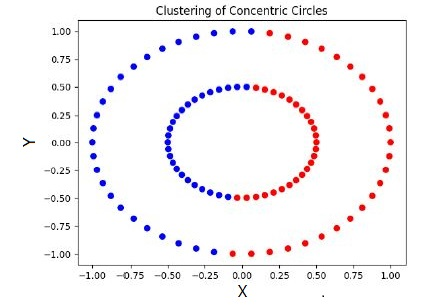
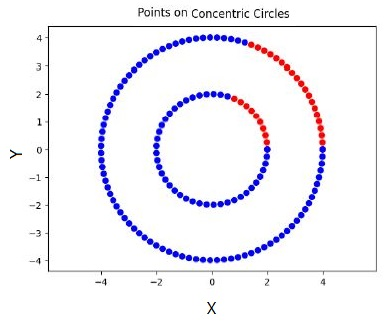
Which of the following statements is/are true?




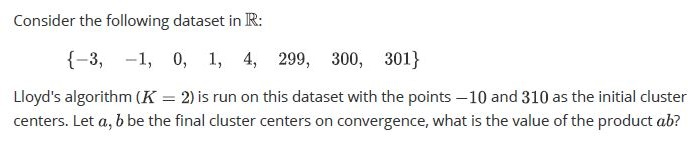


Concepts this paper tests
Auto-generated summary from the source site. Handy as a checklist; the lessons above explain each idea from scratch.
Summary of Core Topics, Concepts, Principles, and Equations
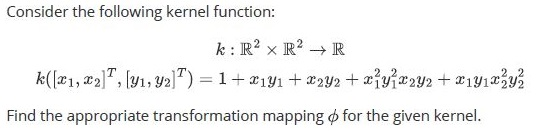
1. Kernel Functions and Transformation Mapping
- Kernel Functions: Functions that compute the dot product of the transformed input data in a higher-dimensional space.
- Transformation Mapping (): A function that maps input data into a higher-dimensional space.
- Key Equation:
- Transformation Mapping for the Given Kernel:
2. K-means Clustering
- Algorithm: Iterative algorithm that partitions data into clusters.
- Euclidean Distance: Distance metric used to calculate the distance between points.
- Centroids: Mean of the points in a cluster.
Key Steps:
- Initialize centroids.
- Assign each data point to the nearest centroid.
- Recalculate the centroids.
- Repeat until convergence.
3. Principal Component Analysis (PCA)
- PCA: Technique to reduce the dimensionality of a dataset while preserving its variance.
- Covariance Matrix: Matrix used to find the principal components.
- Eigenvalues and Eigenvectors: Used to determine the principal components.
Key Concepts:
- The first principal component has the largest eigenvalue.
- The variance along the first principal component is maximum.
- Key Equations:
4. Kernel PCA
- Kernel PCA: Extension of PCA using kernel functions to handle non-linear data.
Key Concepts:
- The number of principal components cannot be more than the dimensionality of the dataset.
- Valid kernel functions can be combined to form new kernel functions.
- Key Equations:
5. Lloyd's Algorithm (K-means)
- Convergence: Algorithm terminates when centroids do not change.
Key Concepts:
- Initial centroids can affect the final clusters.
- The algorithm may not converge to the global optimum.
6. Bernoulli Distribution and Maximum Likelihood Estimate (MLE)
- Bernoulli Distribution: Probability distribution for binary outcomes.
- MLE: Method to estimate the parameters of a statistical model.
- Key Equations:
7. Beta Distribution and Bayesian Inference
- Beta Distribution: Probability distribution for the parameter of a Bernoulli distribution.
- Prior and Posterior Distributions: Used in Bayesian inference to update the probability of a hypothesis.
- Key Equations:
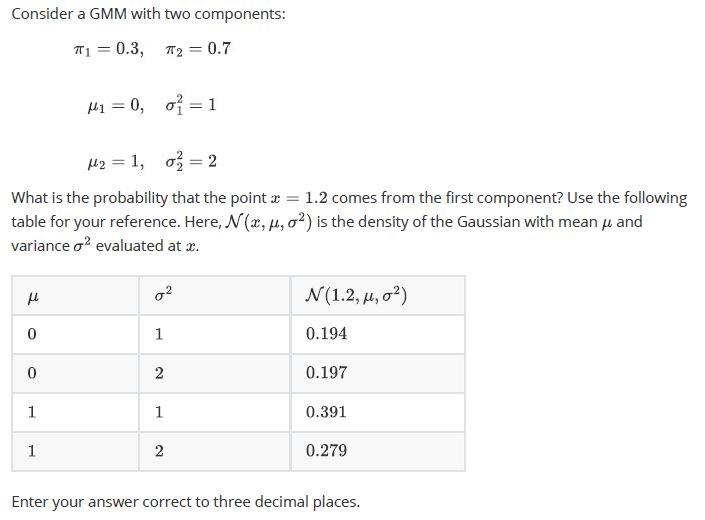
8. Gaussian Mixture Models (GMM)
- GMM: Probabilistic model that assumes data is generated from a mixture of Gaussian distributions.
Key Concepts:
- Each component has a mean () and variance ().
- The probability of a point belonging to a component is given by the mixture weights ().
- Key Equations: