Home / Past papers / MLT End Term / this paper
IIT M FOUNDATION DIPLOMA FN EXAM QDF1 28 Apr 2024 - 28 Apr 2024

- An equilateral triangle centered around the mean of the data.
- Cluster centers positioned along a straight line.
- A triangle with two acute angles, positioned strategically within the datadistribution.
- A right-angled triangle with one center at the origin.

- Model 1
- Model 2
- Both models are equally sensitive to outliers
- Insufficient data
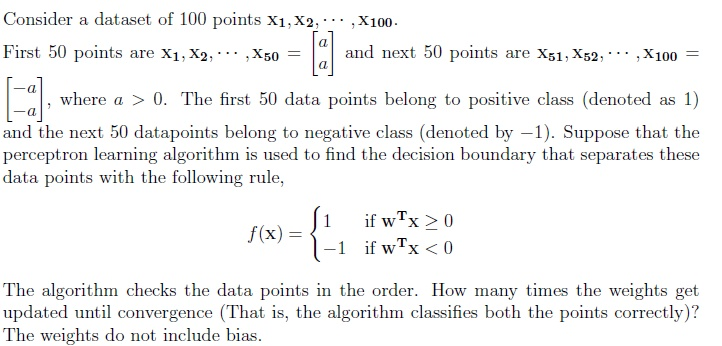
- 1
- 2
- 4
- It oscillates and never converges












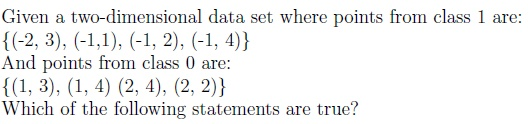










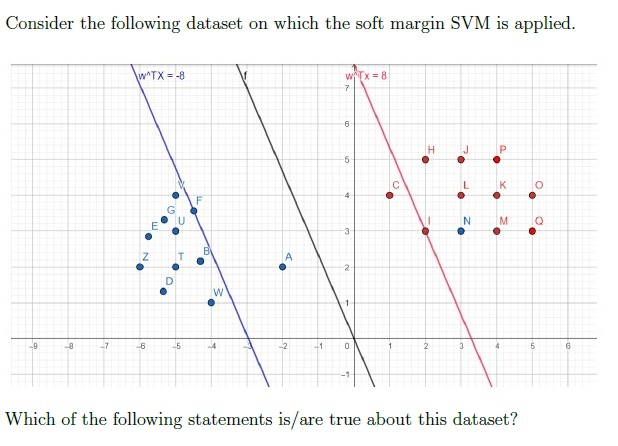
- Points {F, I} are the only support vectors.
- Points {A, N} are a subset of support vectors.
- Points {F, A, C, I} are the only support vectors.
- Points except {F, A, C, I, N} do not play any role in determining optimal weightvector.
- Points except {F, A, C, I} do not play any role in determining optimal weightvector.
Answer key
- Q1 (SA, 3 marks): 7
- Q2 (SA, 3 marks): 0.80
- Q3 (SA, 3 marks): 0.25
- Q4 (SA, 3 marks): 0
- Q5 (SA, 3 marks): 25
- Q6 (SA, 3 marks): 0.70 to 0.80
- Q7 (MCQ, 3 marks): B
- Q8 (MCQ, 3 marks): B
- Q9 (MCQ, 3 marks): A
- Q10 (MCQ, 3 marks): B
- Q11 (MSQ, 3 marks): A, C
- Q12 (MSQ, 3 marks): B, C
- Q13 (MSQ, 3 marks): A, B
- Q14 (MSQ, 3 marks): A, C
- Q15 (MSQ, 4 marks): A, B, D, E
- Q16 (MSQ, 4 marks): B, D
Concepts this paper tests
Auto-generated summary from the source site. Handy as a checklist; the lessons above explain each idea from scratch.
Here’s a structured summary of the core topics, concepts, principles, and equations essential for the Diploma Level: Machine Learning Techniques exam, along with Mermaid knowledge graphs to visualize relationships.
1. Core Topics & Key Concepts
A. Linear Algebra & Statistics
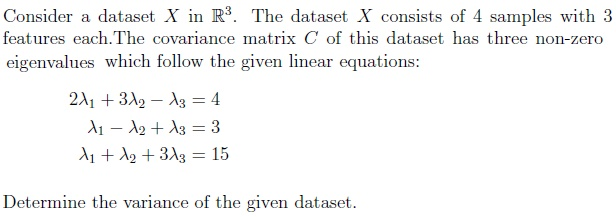
Covariance Matrix & Eigenvalues
- Covariance matrix for a dataset :
- Eigenvalues () represent variance along principal components.
- Total variance = Sum of eigenvalues:
- Solve linear systems for eigenvalues (e.g., Question 2).
Probability & Distributions
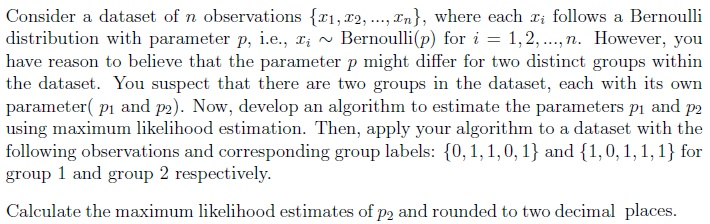
- Bernoulli Distribution:
- Maximum Likelihood Estimation (MLE) for :
- For two groups (e.g., Question 3), estimate and separately:
Bayesian Probability (Naive Bayes)
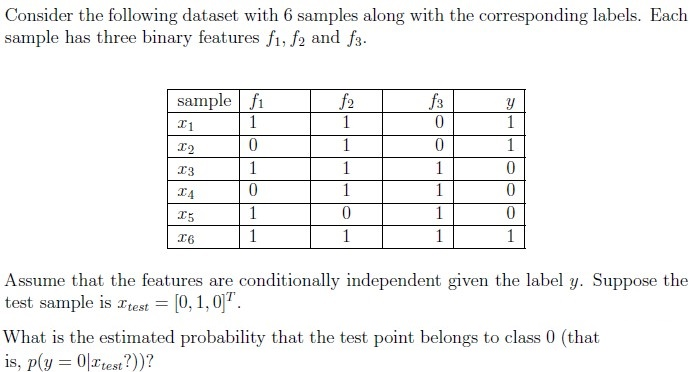
- Conditional independence assumption:
- Posterior probability (e.g., Question 5):
- If , no test samples match the training data for .
B. Supervised Learning
Decision Trees
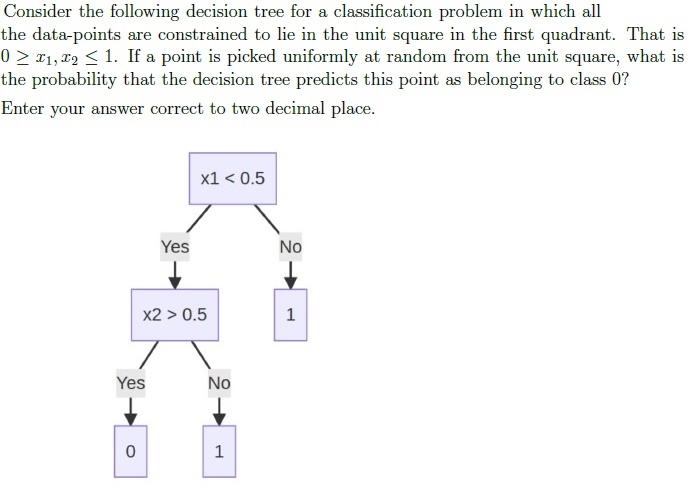
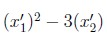
Splitting rules (e.g., Question 4):
- Split on , then .
- Probability of class 0 = Area of region where and :
- Entropy/Information Gain (not directly tested here but related).
Perceptron Algorithm
- Update rule (e.g., Questions 6, 10):
- Mistake bound for linearly separable data:
where , .
For Question 6: , , so max mistakes = .
- Convergence: Stops when all points are correctly classified (e.g., Question 10 converges in 1 update).
Support Vector Machines (SVM)
Hard-margin SVM (e.g., Question 14):
- Linearly separable if a hyperplane exists with .
- Margin width:
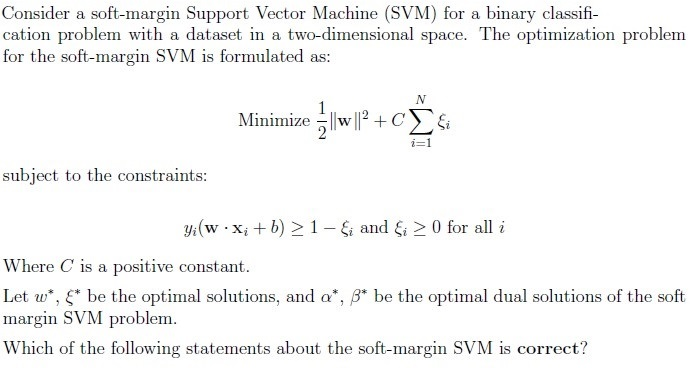
Soft-margin SVM (e.g., Questions 16, 17):
- Optimization problem:
KKT conditions:
- If , then (point is a support vector).
- If , then (no bribe paid).
Effect of :
- Small : Larger margin, more misclassifications.
- Large : Hard-margin-like behavior.
Linear Regression
- Normal equation (e.g., Question 13):
- Zero training loss if is in the column space of (i.e., for some ).
C. Unsupervised Learning
K-Means Clustering
- Objective: Minimize within-cluster sum of squares (WCSS).
Behavior with correlated features (e.g., Question 8):
- If features are perfectly correlated (), clusters align along a straight line (not triangular).
Principal Component Analysis (PCA) & Kernel PCA
- Standard PCA = Kernel PCA with linear kernel (e.g., Question 12).
- Kernel trick: Can map data to infinite dimensions (e.g., polynomial kernel ).
D. Neural Networks
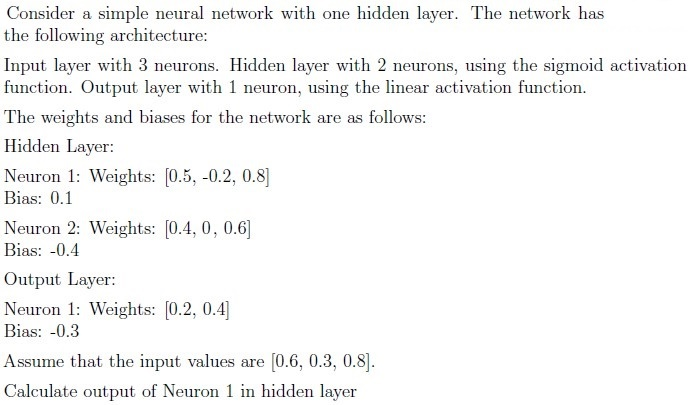
Feedforward Neural Network (e.g., Question 7)
- Hidden layer with sigmoid activation:
- Output layer with linear activation:
- Example calculation (Neuron 1 in hidden layer):
E. Ensemble Methods
AdaBoost
- Weighted misclassification error (e.g., Question 15):
- Weight updates: Increase weights for misclassified points.
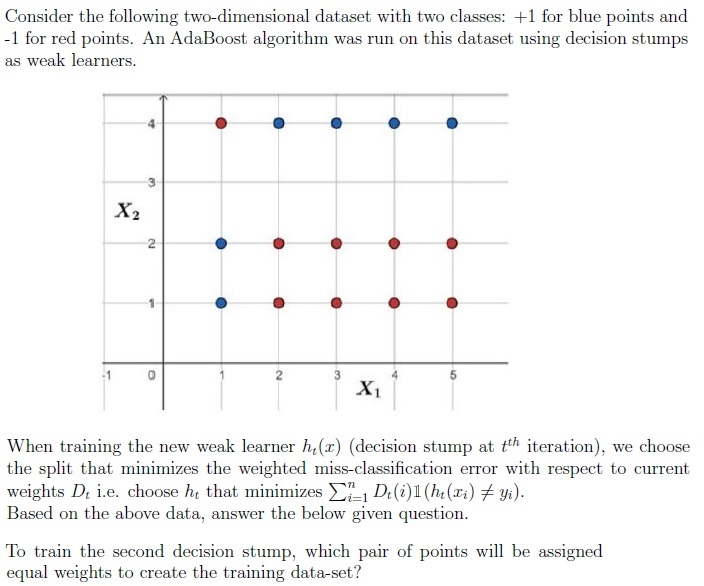
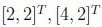
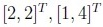
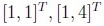
- Example: Points misclassified in the first stump get equal weights in the second stump (e.g., and ).
F. Optimization
Lagrangian & Duality (e.g., Question 11)
- Lagrangian for constrained optimization:
- Dual problem: Maximize w.r.t. .
2. Key Equations Summary
| Topic | Equation |
|---|---|
| Covariance Matrix | |
| Total Variance | |
| Bernoulli MLE | |
| Naive Bayes Posterior | |
| Perceptron Update | if misclassified |
| SVM Margin | |
| Soft-margin SVM | |
| K-Means Objective | |
| Neural Network (Sigmoid) | |
| AdaBoost Error | |
| Linear Regression |
Graph 2: Unsupervised Learning & Dimensionality Reduction
Graph 3: Probability & Estimation
Graph 4: Optimization & Neural Networks
4. Exam Strategy
Focus Areas:
- Eigenvalues/Covariance: Solve linear systems for eigenvalues (Question 2).
- MLE for Bernoulli: Separate estimates for groups (Question 3).
- Geometric Probability: Calculate areas for decision trees (Question 4).
- Naive Bayes: Check for zero posterior (Question 5).
- Perceptron: Mistake bound and convergence (Questions 6, 10).
- SVM: Margin width, KKT conditions, and kernels (Questions 14, 16, 17).
- K-Means: Cluster shapes with correlated data (Question 8).
- Neural Networks: Forward pass calculations (Question 7).
- AdaBoost: Weight updates (Question 15).
Common Pitfalls:
- Misapplying conditional independence in Naive Bayes.
- Confusing hard-margin vs. soft-margin SVM.
- Incorrectly calculating areas for decision tree probabilities.
- Forgetting to normalize or center data for PCA/SVM.
Time Management:
- Spend ~1-2 minutes per question on average.
- Prioritize calculations (e.g., eigenvalues, MLE) over theoretical questions.