Home / Past papers / MLT Quiz 2 / this paper
Machine Learning Techniques 15 Apr 26 - 12 Apr 2026
Elapsed 00:00

- PCA has reduced the dimensionality of the dataset because the combinations of features are de-correlated.
- PCA has not reduced the dimensionality of the dataset because all principal components are retained.
- PCA always reduces the dimensionality of the dataset regardless of the number of components retained.
- PCA can never be used for dimensionality reduction.
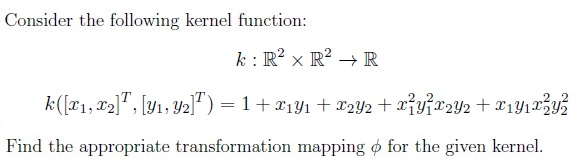









- 40
- 60
- 100
- 1
Which among the following is TRUE for k-NN algorithm? Select all that apply.
- 1-nearest neighbour is sensitive to outliers.
- k-NN can only be applied to a classification problem.
- As k increases, the model is more likely to overfit.
- The bias increases with the increase in the value of k.
- The variance increases with the increase in the value of k.

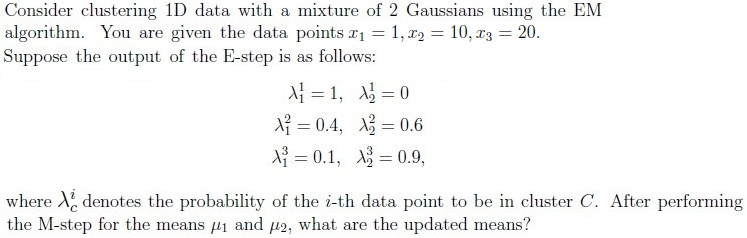
- 30
- 120
- 50
- 160





With respect to the Lloyd’s algorithm, choose the correct statements:
- The partition configurations cannot repeat themselves.
- After doing the reassignments (consider at least one point reassigned to the new cluster), we might get the same means for all clusters.
- Objective function after making the re-assignments strictly reduces.
- Objective function after making the re-assignments strictly increases.
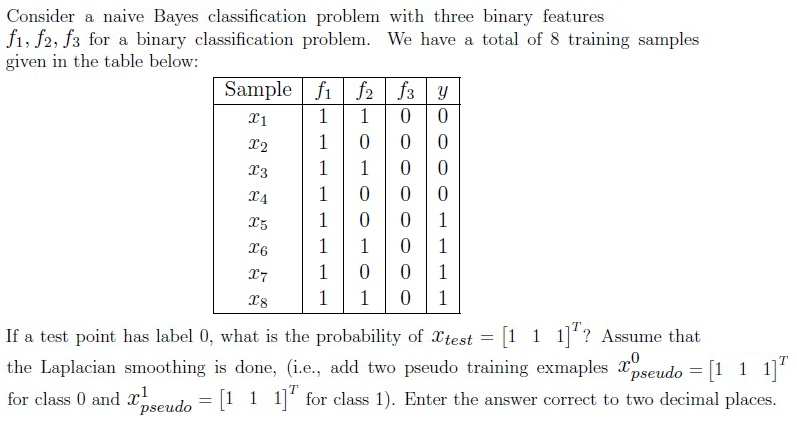
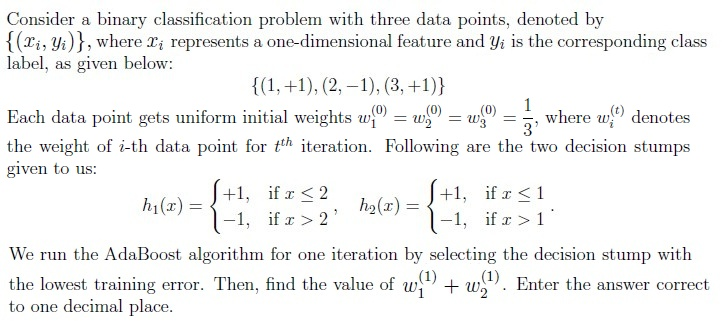
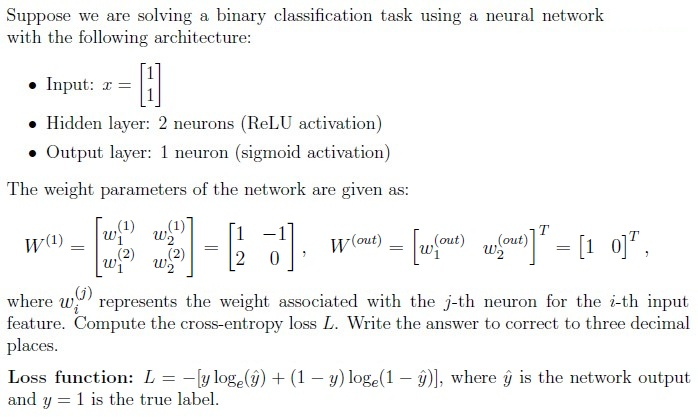
Comprehension passage - the questions below it refer to this
Based on the above data, answer the given subquestions.
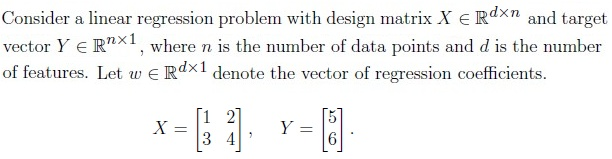
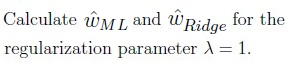




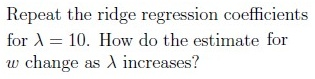
- The coefficients shrinks towards zero.
- The coefficients increases in magnitude.
- The coefficients remain unchanged.
Comprehension passage - the questions below it refer to this
Based on the above data, answer the given subquestions.
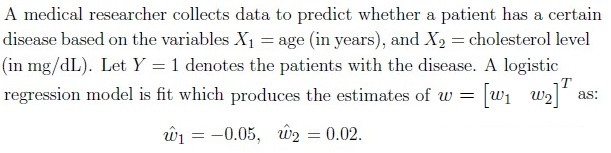
What is the probability that a 60-year-old patient with a cholesterol level of 200 mg/dL has the disease? Enter the answer correct to two decimal places.
How high should the cholesterol level be for the patient mentioned in the previous question to have a 50% chance of being diagnosed with the disease?
Comprehension passage - the questions below it refer to this
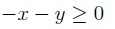
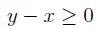
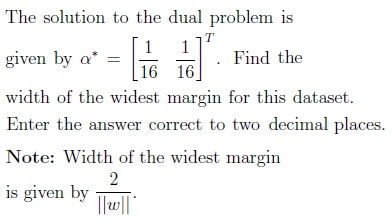
Consider the datapoints (−2,−2) with label +1 and (2, 2) with label −1. A hard margin SVM is applied on this dataset. Answer the given subquestions:Which of the following is the decision boundary for the given dataset?


Answer key
- Q1 (MCQ, 3 marks): B
- Q2 (MCQ, 3 marks): C
- Q3 (MCQ, 4 marks): D
- Q4 (MCQ, 2 marks): C
- Q5 (MSQ, 3 marks): A, D
- Q6 (MSQ, 3 marks): A, B, C
- Q7 (MSQ, 3 marks): B, D
- Q8 (MSQ, 2 marks): A, C
- Q9 (SA, 3 marks): 0.10 to 0.14
- Q10 (SA, 4 marks): 0.5
- Q11 (SA, 4 marks): 0.69 to 0.696
- Q12 (MCQ, 4 marks): D
- Q13 (MCQ, 2 marks): A
- Q14 (SA, 3 marks): 0.71 to 0.75
- Q15 (SA, 3 marks): 150
- Q16 (MCQ, 2 marks): B
- Q17 (SA, 2 marks): 5.64 to 5.68