Home / Past papers / MLP Quiz 2 / this paper
IIT M DIPLOMA QUIZ2 EXAM QPE1 10 July 2022 IBA - 10 Jul 2022
Elapsed 00:00
- Yes
- No
Which of the following vectorizer techniques can help to convert a large collection of text documents to a matrix?
- CountVectorizer
- HashingVectorizer
- Both CountVectorizer and HashingVectorizer
- None of these
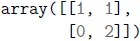
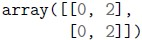
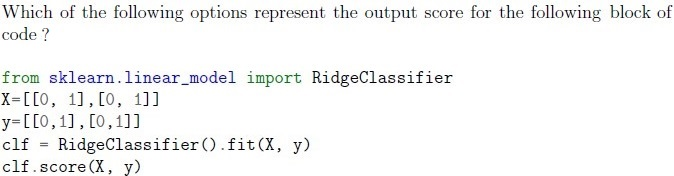
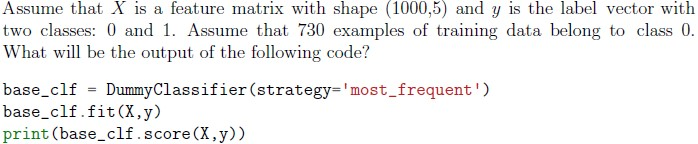
- 0.0
- 1.0
- -1.0
- 0.5
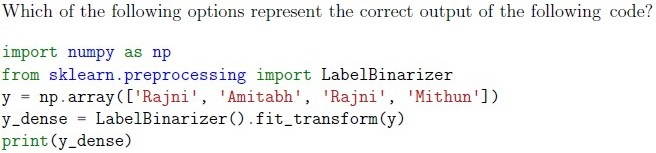
Which of the options below represent the correct method to preprocess class labels in multi-class setup?
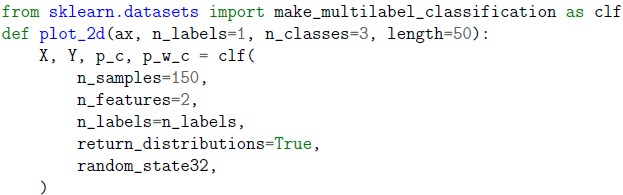
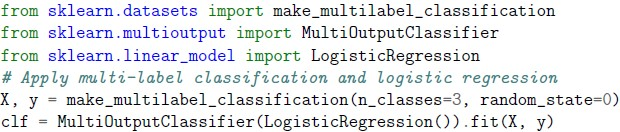
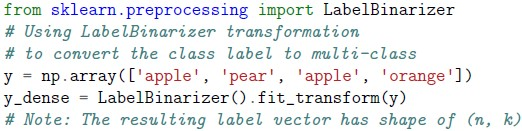
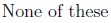




- 0.65
- 0.73
- 0.37
- None of these
Rakesh is solving a regression problem with a KNN model. He has considered k = 3 for his model. Based on the graph shown below, what would you suggest him out of the following options?
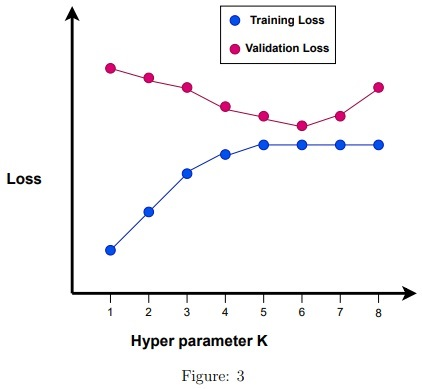 Rakesh is solving a regression problem with a KNN model. He has considered k = 3 for his model. Based on the graph shown below, what would you suggest him out of the following options?
 - His model is suffering from overfitting. So, he should increase the value of k.
- His model is suffering from underfitting. So, he should increase the value of k.
- His model is suffering from overfitting. So, he should decrease the value of k.
- His model is suffering from underfitting. So, he should decrease the value of k.
- No suggestions, Rakesh has already chosen the best value of k.
l1 penalty in LinearSVC classifier leads to coef_vectors which are-
- dense.
- sparse.
- Unique class labels.
- l1 penalty can’t be set via a parameter in LinearSVC.
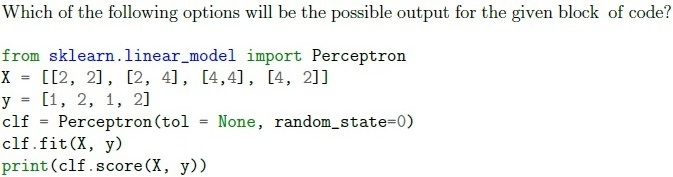
- 1
- 0
- 0.5
- 0.40

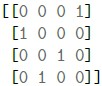


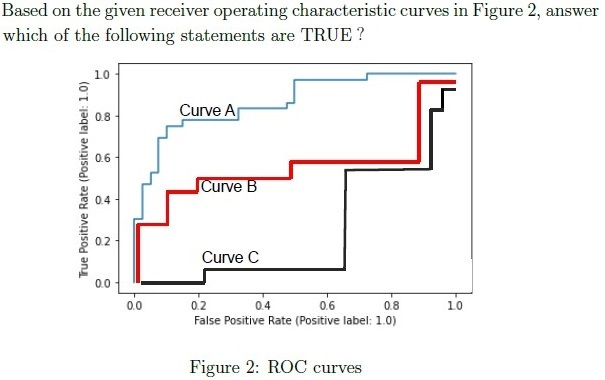
- The classifier shown in ‘Curve B’ is better than the other two classifiers.
- The classifier shown in ‘Curve A’ is better than the other two classifiers.
- The classifier shown in ‘Curve C’ is better than the other two classifiers.
- All 3 curves demonstrate 3 classifiers of the same quality.
For a text classification task, which one of the following code snippets will be better suitable than the others?




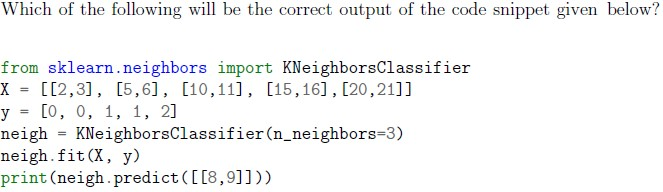
- 0
- 1
- 2
- None
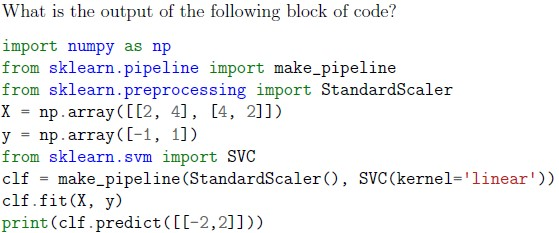






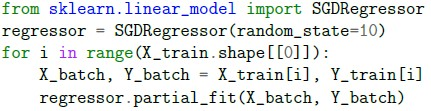
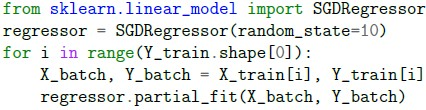
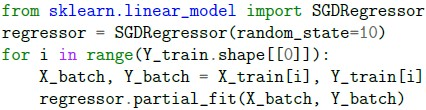
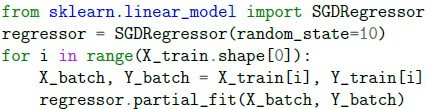
Which of the following code blocks will correctly train a large scale regression model using partial_fit, if shape of X_train,Y_train are given as (8000,900,10) and (8000,900) respectively. Note that the dataset has been transformed into batches of size 900 each?
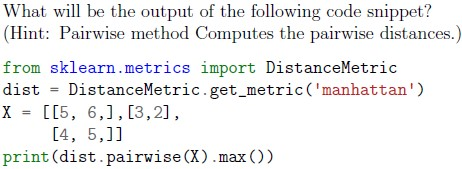
Comprehension passage - the questions below it refer to this
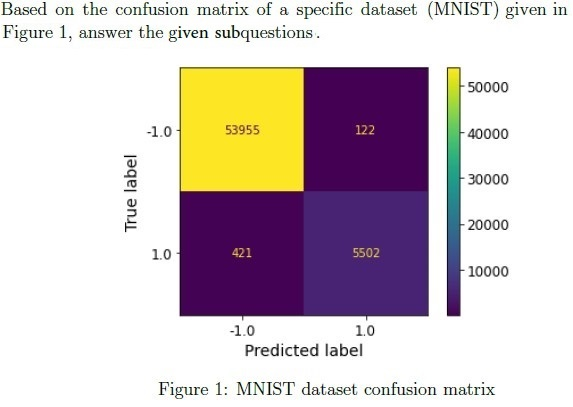
Calculate the precision value (up to 3 decimal places) from the confusion matrix.
Calculate the recall value (up to 3 decimal places) from the confusion matrix.
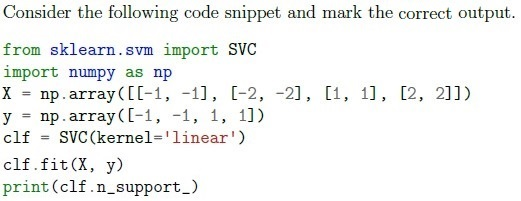
Comprehension passage - the questions below it refer to this
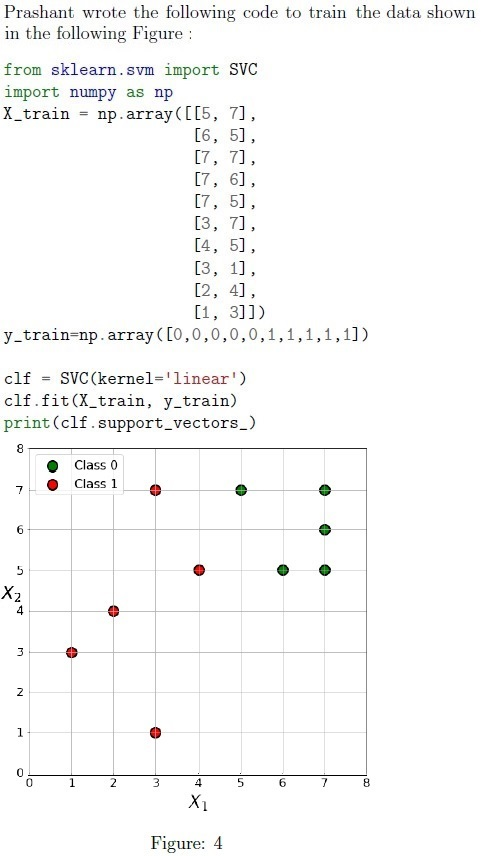
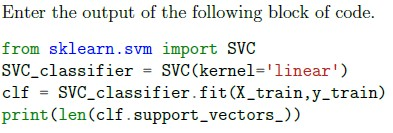
What is the output that Prashant will get?
- Indices of support vectors.
- Number of support vectors.
- Weights assigned to the features when kernel=”linear”
- ndarray of support vectors.
Answer key
- Q1 (MCQ, 0 marks): A
- Q2 (MCQ, 1 marks): B
- Q3 (MCQ, 2 marks): A
- Q4 (MCQ, 2 marks): B
- Q5 (MCQ, 2 marks): C
- Q6 (MCQ, 2 marks): A
- Q7 (MCQ, 2 marks): B
- Q8 (MCQ, 2 marks): A
- Q9 (MCQ, 2 marks): B
- Q10 (MCQ, 3 marks): C
- Q11 (MCQ, 3 marks): D
- Q12 (MCQ, 3 marks): B
- Q13 (MCQ, 3 marks): B
- Q14 (MCQ, 3 marks): A
- Q15 (MCQ, 3 marks): D
- Q16 (MCQ, 3 marks): C
- Q17 (MSQ, 3 marks): B, D
- Q18 (SA, 3 marks): 6
- Q19 (SA, 1.5 marks): 0.970 to 0.980
- Q20 (SA, 1.5 marks): 0.925 to 0.935
- Q21 (MCQ, 2 marks): D
- Q22 (SA, 3 marks): 4