Home / Past papers / MLP End Term / this paper
IIT M DIPLOMA AN EXAM QDD4 13 Apr 2025 - 13 Apr 2025
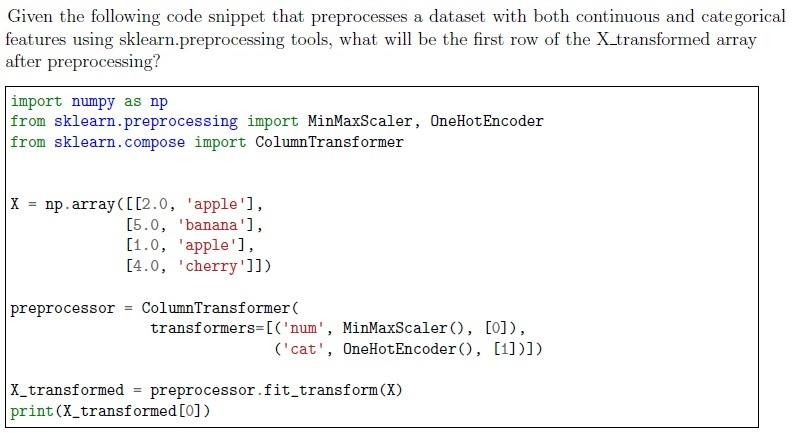
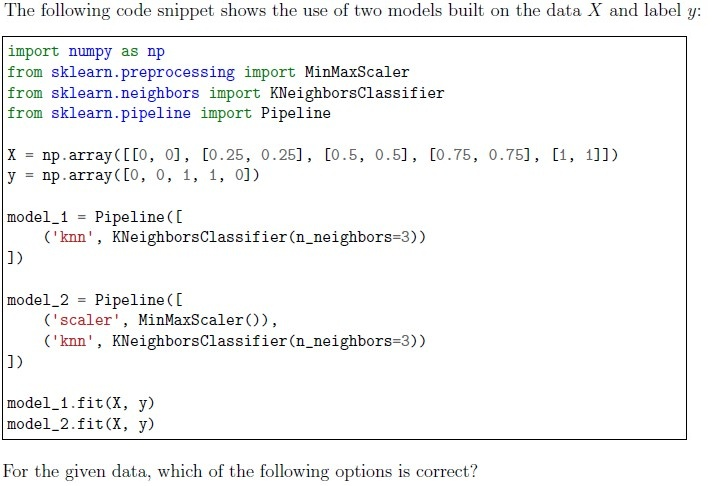
- [0.25, 1, 0, 0]
- [0.5, 0, 1, 0]
- [0, 1, 0, 0]
- [1, 0, 0, 1]
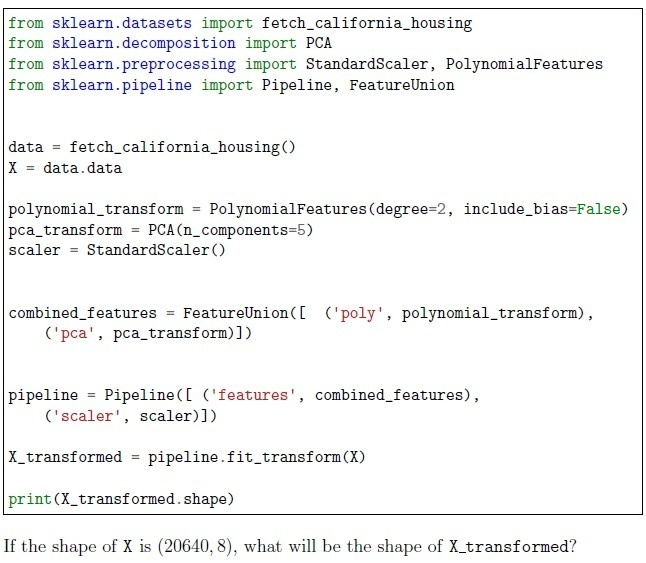 Consider the following code snippet:
- (20640, 8)
- (20640, 5)
- (20640, 44)
- (20640, 49)
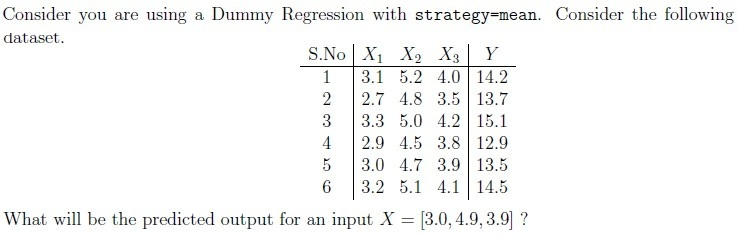
- 13.6
- 14.0
- 14.2
- 14.5
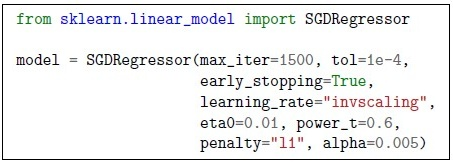
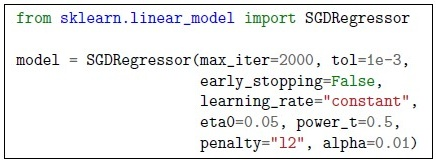
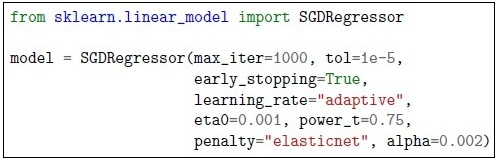
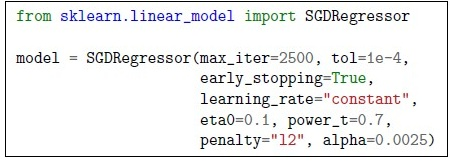
- Training the model.
- Choosing the best k value.
- Storing and searching through all training samples at prediction time.
- Calculating class probabilities.
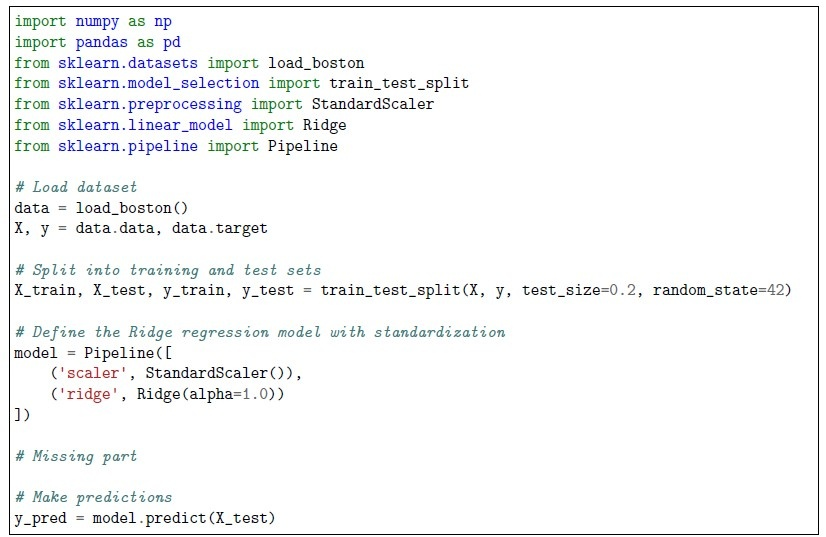 The following code attempts to implement Ridge regression on the Boston housing dataset but contains an error. The missing part should be correctly filled in to avoid issues during training.
Which of the following correctly fills the missing part while ensuring proper preprocessing?




- GridSearchCV
- ElasticNetCV
- SelectKBest
- Feature Scaling with StandardScaler
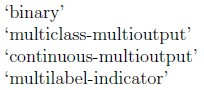
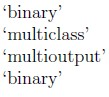





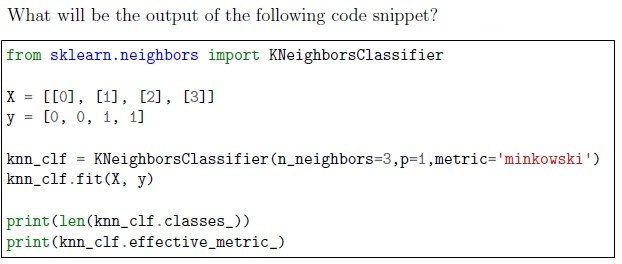
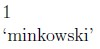











- It decides how many features are to be considered by each of the estimators
- It signifies the influence of each estimator towards the prediction
- It offers the order in which each estimator is considered before making aprediction
- It provides weights to different classes in a multiclass classification problem






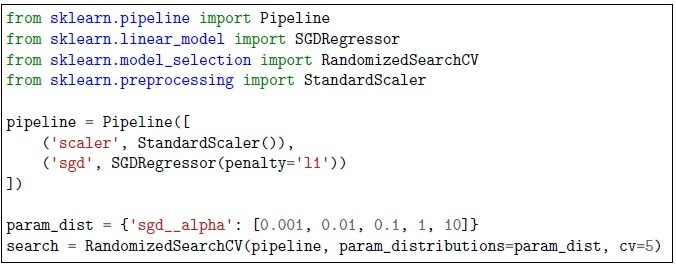
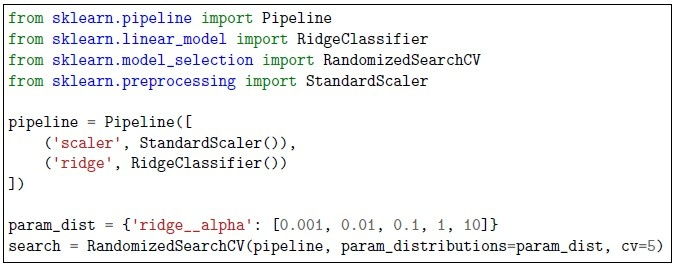
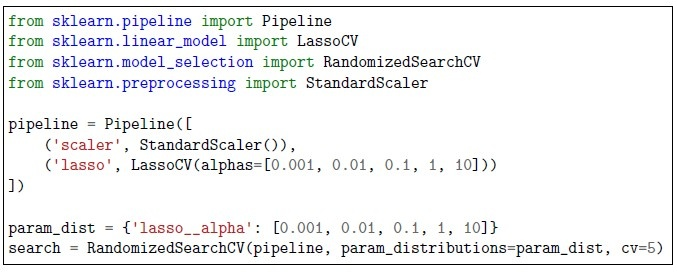
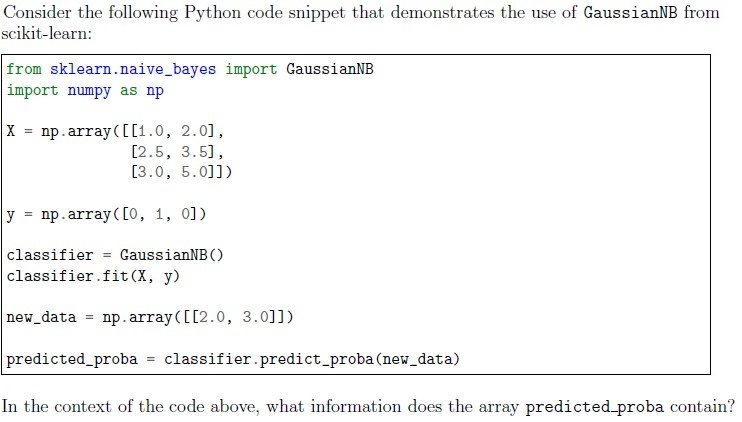
- The predicted classes for the new data points.
- The decision boundary values for the classes.
- The posterior probabilities of the classes for the new data points.
- The likelihood estimates for the new data points.
- The decision boundary of a logistic regression model is always a straight line.
- The solver parameter in logistic regression determines the optimizationalgorithm used for training the model.
- Logistic regression can naturally handle multi-class classification without anymodifications.
- The regularization strength in logistic regression can be controlled using the Cparameter.
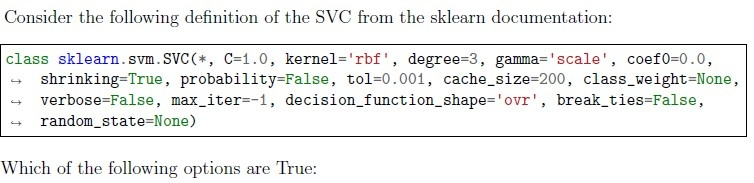









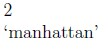
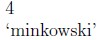
- Euclidean Distance
- Tree Distance
- Centroid Distance
- Minkowski Distance





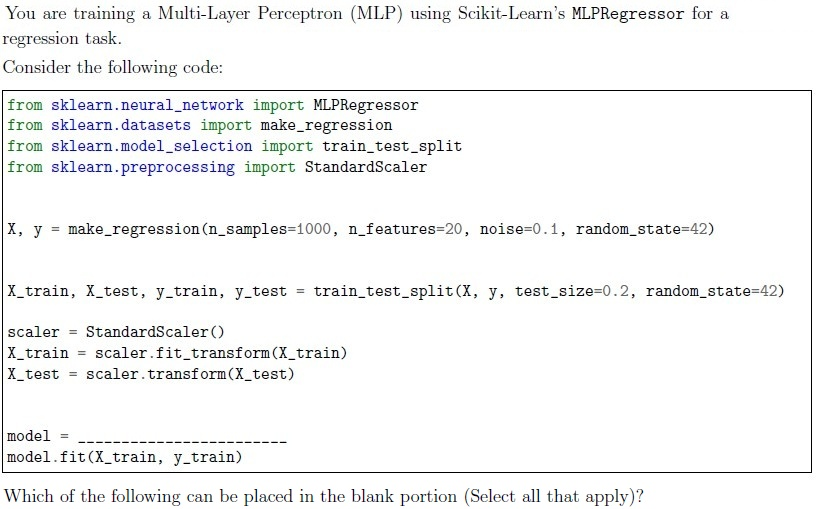
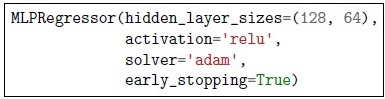
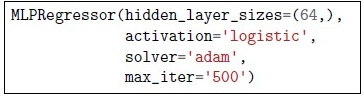
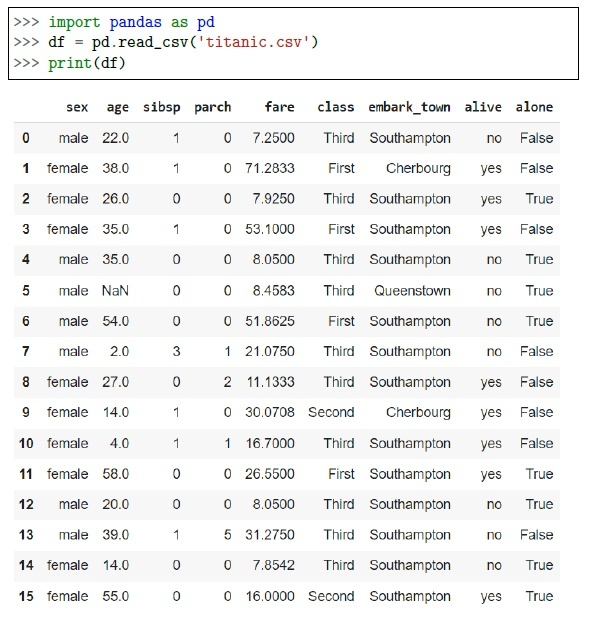
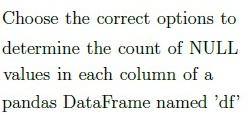




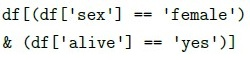
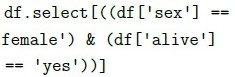
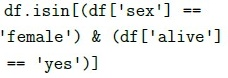
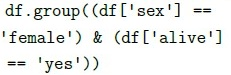
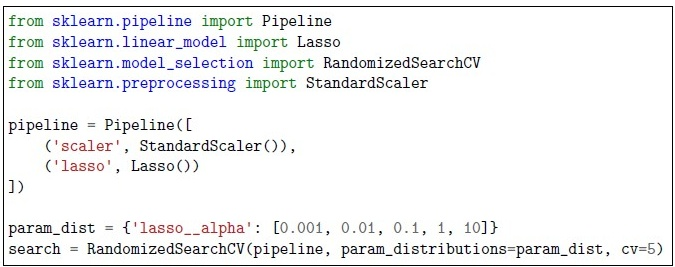
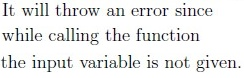
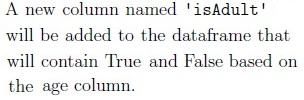
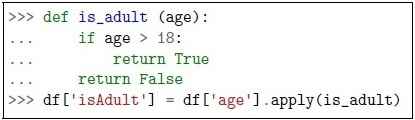 What is the given code below trying to accomplish for the given titanic dataset ?
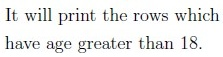
- Both the assertion and reason are correct, and the reason is a correctexplanation of the assertion
- Both the assertion and reason are correct, but the reason is not a correctexplanation of the assertion.
- The assertion is correct, but the reason is incorrect.
- The assertion is incorrect, but the reason is correct.
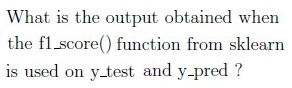
Answer key
- Q1 (MCQ, 1 marks): A
- Q2 (MCQ, 1 marks): D
- Q3 (MCQ, 1 marks): B
- Q4 (MCQ, 1 marks): A
- Q5 (MCQ, 1 marks): C
- Q6 (MCQ, 2 marks): A
- Q7 (MCQ, 2 marks): A
- Q8 (MCQ, 2 marks): C
- Q9 (MCQ, 2 marks): B
- Q10 (MCQ, 2 marks): B
- Q11 (MCQ, 2 marks): C
- Q12 (MCQ, 2 marks): D
- Q13 (MCQ, 2 marks): B
- Q14 (MCQ, 2 marks): D
- Q15 (MCQ, 3 marks): B
- Q16 (MCQ, 3 marks): C
- Q17 (MSQ, 3 marks): B, D
- Q18 (MSQ, 2 marks): A, C
- Q19 (MSQ, 2 marks): A, B, C
- Q20 (MSQ, 2 marks): A, D
- Q21 (MSQ, 2 marks): A, C
- Q22 (MSQ, 1 marks): A, C
- Q23 (SA, 1 marks): 9.2
- Q24 (SA, 2 marks): 0.20
- Q25 (MCQ, 1 marks): A
- Q26 (MCQ, 1 marks): A
- Q27 (MCQ, 1 marks): C
- Q28 (MCQ, 1 marks): D
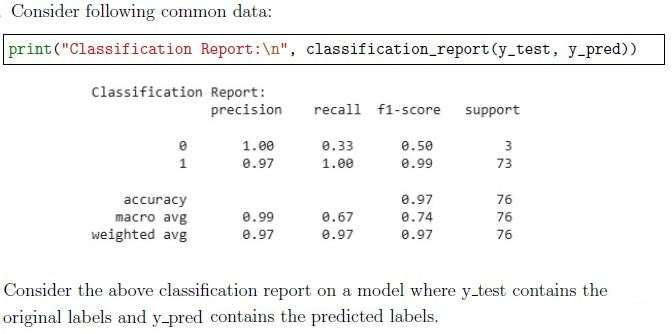
- Q29 (SA, 1 marks): 73
- Q30 (SA, 1 marks): 0.99
Concepts this paper tests
Auto-generated summary from the source site. Handy as a checklist; the lessons above explain each idea from scratch.
Here’s a structured summary of core topics, concepts, principles, and equations essential for the Diploma Level: Machine Learning Practice (Computer-Based Exam), along with Mermaid knowledge graphs to visualize relationships.
1. Core Topics & Concepts
A. Data Preprocessing
Key Concepts:
Scaling/Normalization:
- MinMaxScaler: Scales features to
[0, 1]range.
- MinMaxScaler: Scales features to
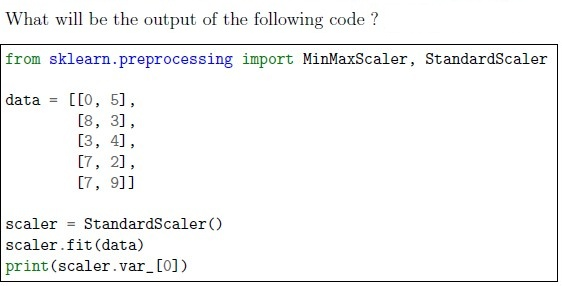
- StandardScaler: Standardizes features to have mean=0 and variance=1.
Encoding Categorical Data:
- One-Hot Encoding: Converts categorical variables into binary vectors.
- Label Encoding: Assigns a unique integer to each category.
Handling Missing Data:
df.isnull().sum(): Counts NULL values.df.fillna(): Imputes missing values.
Polynomial Features:
- Generates polynomial combinations of features (e.g., ).
- Number of features for degree
dandnoriginal features:
PCA (Principal Component Analysis):
- Reduces dimensionality by projecting data onto principal components.
n_components: Number of principal components to retain.
Key Equations:
| Technique | Equation |
|---|---|
| MinMax Scaling | |
| Standard Scaling | |
| Polynomial Features | (for degree d and n features) |
B. Supervised Learning
Key Algorithms:
Linear Models:
- Ridge Regression (L2 Regularization):
- Lasso Regression (L1 Regularization):
SGDRegressor:
- Supports
penalty='l1'or'l2'. - Learning rate schedules:
constant,invscaling,adaptive. invscalinglearning rate:
- Supports
Logistic Regression:
- Decision Boundary: Not always linear (depends on features).
- Regularization: Controlled by
C(inverse of regularization strength). - Solvers:
liblinear,lbfgs,saga(for small/large datasets).
Naïve Bayes:
- Assumes feature independence given the class.
Types:
- GaussianNB: For continuous data.
- BernoulliNB: For binary features.
- MultinomialNB: For discrete counts (e.g., text classification).
Support Vector Machines (SVM):
- Kernel Trick: Transforms data into higher dimensions (
linear,poly,rbf,sigmoid). - Regularization:
Ccontrols trade-off between margin width and classification error.
- Kernel Trick: Transforms data into higher dimensions (
k-Nearest Neighbors (k-NN):
- Distance Metrics: Euclidean, Manhattan (
p=1), Minkowski. - Computational Bottleneck: Prediction time (searches entire training set).
- Distance Metrics: Euclidean, Manhattan (
Ensemble Methods:
- AdaBoost: Boosts weak learners;
learning_ratecontrols contribution of each tree. Random Forest:
max_features: Number of features considered for splits.bootstrap: Whether to sample with replacement.oob_score: Out-of-bag error for generalization estimate.
- Voting Classifier: Combines predictions from multiple models;
weightscontrol influence.
- AdaBoost: Boosts weak learners;
Key Equations:
| Algorithm | Key Equation/Parameter |
|---|---|
| Ridge Regression | |
| Lasso Regression | |
| SGD Learning Rate | (invscaling) |
| SVM Margin | (margin width) |
| k-NN Distance | (Minkowski) |
C. Unsupervised Learning
Key Algorithms:
k-Means Clustering:
- Initialization:
k-means++spreads initial centroids to avoid poor clusters. - Objective: Minimize within-cluster sum of squares (WCSS).
- Elbow Method: Plots WCSS vs.
kto find optimalk. - Silhouette Score: Measures cluster separation/cohesion.
- Initialization:
Hierarchical Clustering:
- Linkage Methods: Single, complete, average, centroid.
- Distance Metrics: Euclidean, Manhattan, Minkowski.
Key Equations:
| Technique | Equation |
|---|---|
| k-Means Objective | |
| Silhouette Score | (where = intra-cluster distance, = inter-cluster distance) |
D. Model Evaluation
Key Metrics:
Classification:
- Accuracy:
- Precision:
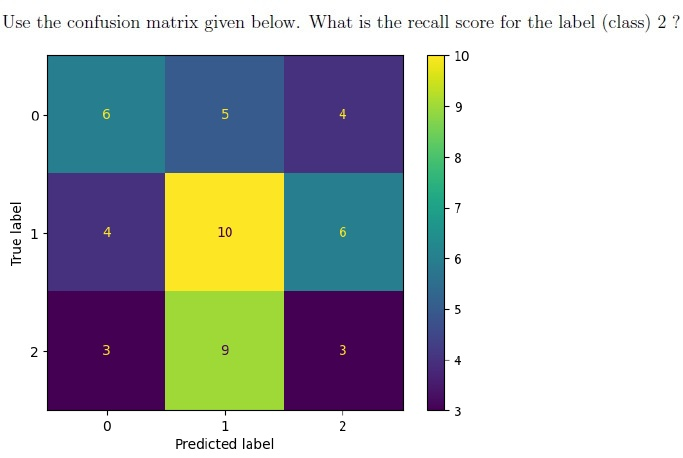
- Recall (Sensitivity):
- F1-Score:
- Confusion Matrix: TP, TN, FP, FN.
Regression:
- MSE (Mean Squared Error):
- R² Score:
Imbalanced Data:
- Accuracy can be misleading; use precision-recall curves or F1-score.
Key Equations:
| Metric | Equation |
|---|---|
| Accuracy | |
| Precision | |
| Recall | |
| F1-Score | |
| MSE |
E. Hyperparameter Tuning
Key Methods:
- GridSearchCV: Exhaustive search over specified parameter values.
- RandomizedSearchCV: Random sampling of parameter combinations.
- Cross-Validation: Splits data into
kfolds for robust evaluation.
F. Neural Networks (MLP)
Key Concepts:
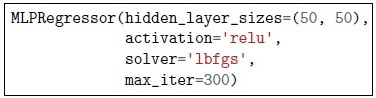
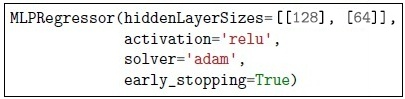
- Hidden Layers: Specified via
hidden_layer_sizes(e.g.,(100, 50)). - Activation Functions:
relu,logistic,tanh. - Solvers:
adam,sgd,lbfgs. - Early Stopping: Halts training if validation score doesn’t improve.
G. Dimensionality Reduction
Key Techniques:
PCA:
- Transforms data into orthogonal components.
n_components: Number of principal components.
Feature Selection:
SelectKBest: Selects topkfeatures based on statistical tests.
Graph 2: Supervised Learning Algorithms
Graph 3: Model Evaluation Metrics
Graph 4: Unsupervised Learning
Graph 5: Hyperparameter Tuning
3. Key Takeaways for the Exam
Data Preprocessing:
- Know when to use
MinMaxScalervs.StandardScaler. - Understand
OneHotEncoderandPolynomialFeatures. - Remember that
PCAreduces dimensions but loses interpretability.
- Know when to use
Supervised Learning:
- Ridge/Lasso: L2 vs. L1 regularization.
- SGDRegressor: Learning rate schedules (
invscaling,adaptive). - k-NN: Manhattan (
p=1) vs. Euclidean (p=2) distance. - Ensemble Methods:
RandomForestusesmax_featuresandbootstrap.
Model Evaluation:
- Imbalanced Data: Recall/F1-score > Accuracy.
- Confusion Matrix: TP, TN, FP, FN.
Unsupervised Learning:
- k-Means: Use
k-means++for better initialization. - Elbow Method/Silhouette Score: For optimal
k.
- k-Means: Use
Hyperparameter Tuning:
GridSearchCVvs.RandomizedSearchCV.- Cross-validation is essential for robust evaluation.
Neural Networks:
MLPRegressorrequireshidden_layer_sizesandsolver.early_stoppingprevents overfitting.
Common Pitfalls:
- Overfitting: Reduce
learning_ratein AdaBoost or increase regularization. - Scaling: Always scale features for distance-based algorithms (k-NN, SVM, PCA).
- Imbalanced Data: Avoid accuracy; use precision/recall.
- Overfitting: Reduce