Home / Past papers / MLP End Term / this paper
IIT M FOUNDATION DIPLOMA ENDTERM QPB2 07 Aug 2022 IBA NS - 07 Aug 2022
- Yes
- No
- Both loaders and fetchers generate controlled synthetic datasets
- Both loaders and fetchers return a Bunch object, which is a dictionary with twokeys
- Both techniques load small standard datasets
- None of these options are correct
- Enables different transformations on various columns of data based on theirtypes
- Combines output from several transformer objects by creating a newtransformer from them
- To chain multiple estimators to execute a fixed sequence of steps in datapreprocessing and modeling
- None of these
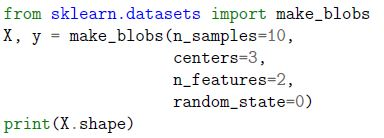 What will be the output of the following block of code?
- (10, 2)
- (2, 10)
- (10, 3)
- (3, 10)
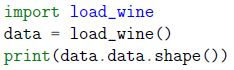



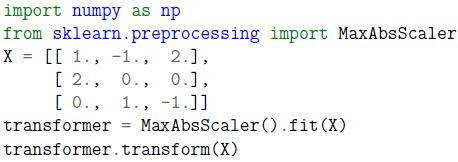 What is the output of the following block of code?
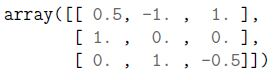
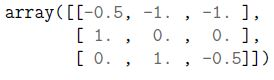
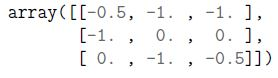
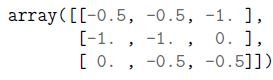
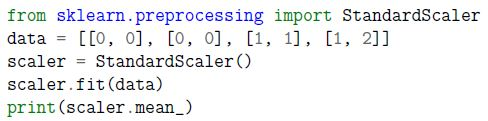 What is the output of the following code snippet?
- [0.75 0.5]
- [0.25 0.5]
- [0.5 0.75]
- [0.5 0.5]
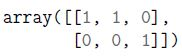
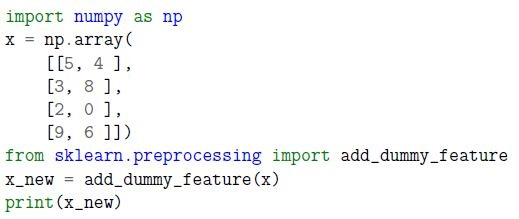 Which of the options will be the correct output for the following code snippet?

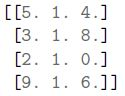
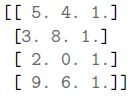
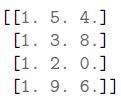
 Which of the options will be the correct output for the following code snippet?
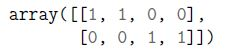
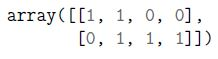
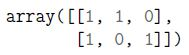
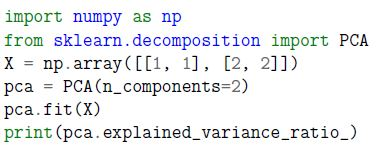 Which of the following options is correct explained variance score for the following code snippet applying PCA technique.
- [1. 1.]
- [1. 0.]
- [0. 1.]
- [0. 0.]
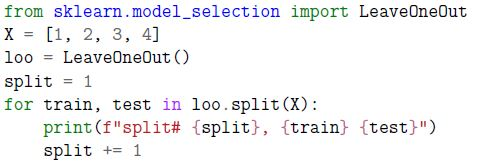 Which of the following options is the correct output of the following block of code?
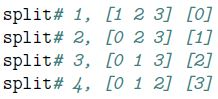
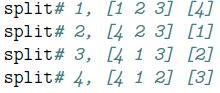
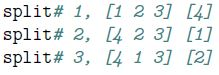
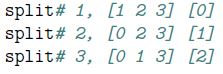



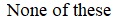
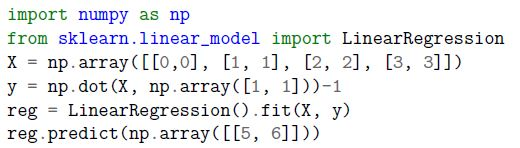 Which of the following options represent the correct output of the following block of code?
- array([9.])
- array([10.])
- array([11.])
- SyntaxError: unexpected EOF while parsing

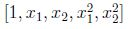

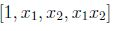

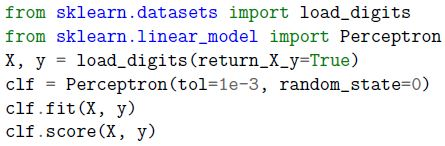 Which of the following options is the possible output for the following block of code?
- 0.94
- 1.25
- 1.94
- -2.64
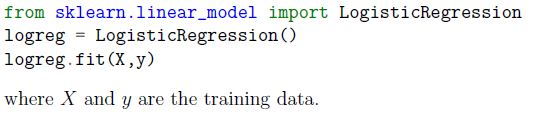 What operation does the following code implement?
- It will perform linear regression on the given data.
- It will generate synthetic regression data.
- It will generate synthetic classification data.
- It will perform classification on the given data.
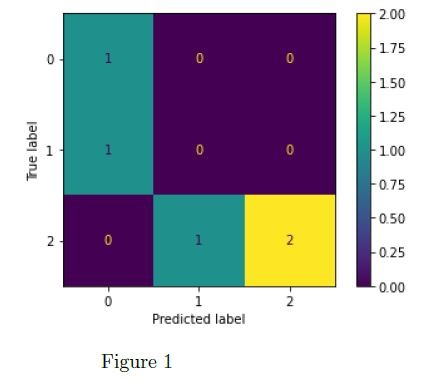 Which of the following options represent the recall value for the class 2 in the confusion matrix shown in Figure 1 if y_true = [0, 1, 2, 2, 2], y_pred = [0, 0, 2, 2, 1] ?
- 0.67
- 1.00
- 0.50
- 0.25
 Consider the following code block and mark the correct output.
- [0 0 0 1 1 1]
- [2 2 0 0 1 1]
- [0 1 2 0 1 2]
- [0 1 0 1 0 1]
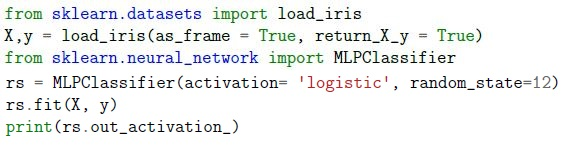 Consider X and y as the training dataset. What will be the output of the following code?
- logistic
- relu
- identity
- softmax
- Nonproliferation of classes
- Execution of all codes within 99.9 ms.
- Sensible defaults
- Direct accessibility of hyperparameters of all estimators
- Search for the best regularization rate with built-in cross validation in RidgeCVestimator
- Step 1: Instantiate object of Ridge estimator.Step 2: Set parameter alpha to the maximum regularization rate.
- Use cross validation with Ridge to search for best regularization.
- Apply cross validation with SGDRegressor for searching the best regularizationparameter.
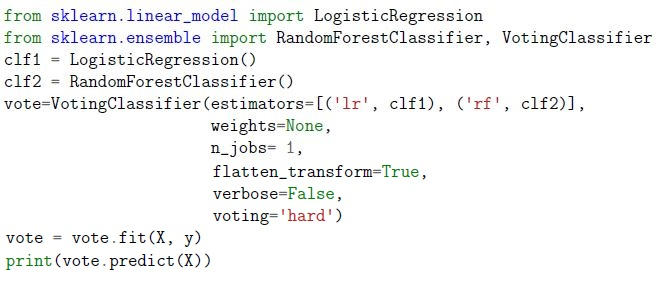 Consider the following block of code and mark all possible correct options.
- Given model uses majority voting rule to predict class labels.
- Given model predicts the class labels based on the argmax of the sums of thepredicted probabilities.
- Setting flatten_transform =True with voting=’soft’ will flatten the output shapeof transform.
- None of these are correct
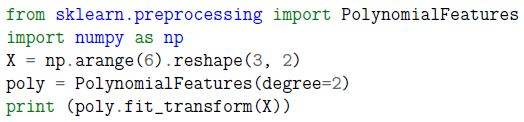 What will be the output of the following code block:
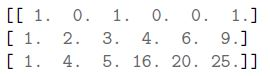
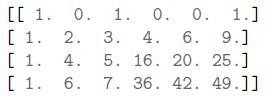
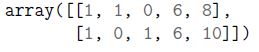
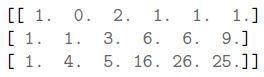
 Which of the following options represent the output of the following block of code?
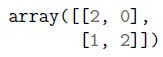
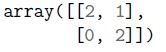
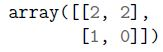
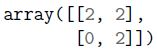
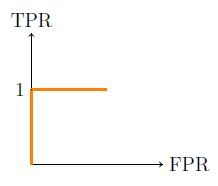 Which of the following statements will be true based on the following diagram?
- The classifier will predict all positive classes as negatives and all negativeclasses as positives.
- The classifier will perfectly distinguish between the positive and negativeclasses.
- There is a good probability that the classifier can properly identify the classes.
- We can not comment on the classifier performance based on the given figure
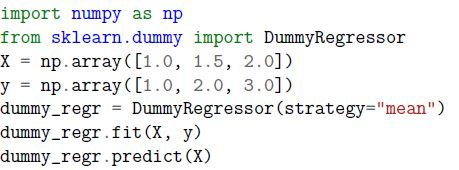 Which of the following options is the correct output of the following block of code?
- array([2.25, 2.25, 2.25])
- array([1., 1., 1.])
- array([2., 2., 2.])
- DummyRegressor()
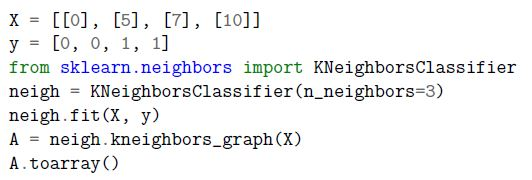 Which of the following is likely to be the correct output of the code given below?
- array([[1., 1., 1., 0.], [1., 1., 1., 0.], [0., 1., 0., 1.], [0., 1., 1., 1.]])
- array([[1., 1., 1., 0.], [1., 1., 1., 0.], [0., 1., 0., 1.], [0., 1., 0., 1.]])
- array([[1., 1., 0., 1.], [0., 1., 1., 0.], [0., 1., 1., 0.], [1., 0., 1., 1.]])
- array([[1., 1., 1., 0.], [1., 1., 1., 0.], [0., 1., 1., 1.], [0., 1., 1., 1.]])
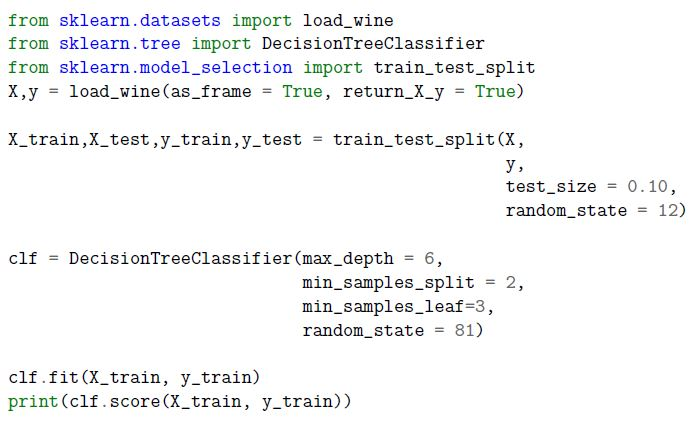 For the following block of code, we get the output as 0.9875. How would the output change if we decrease max depth value ?:
- Output score will definitely increase.
- Output score will definitely decrease.
- Output score may decrease or remain the same.
- Code will throw an error because max_depth can’t be less than 6.
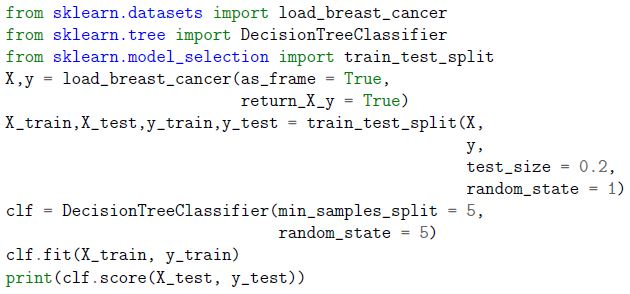 Consider the following block of code and mark the correct option.
- The minimum number of samples required to split a leaf node is 5.
- The minimum number of samples required to split an internal node is 6.
- The minimum number of samples required to be at a leaf node is 4.
- The minimum number of samples required to split an internal node is 5.
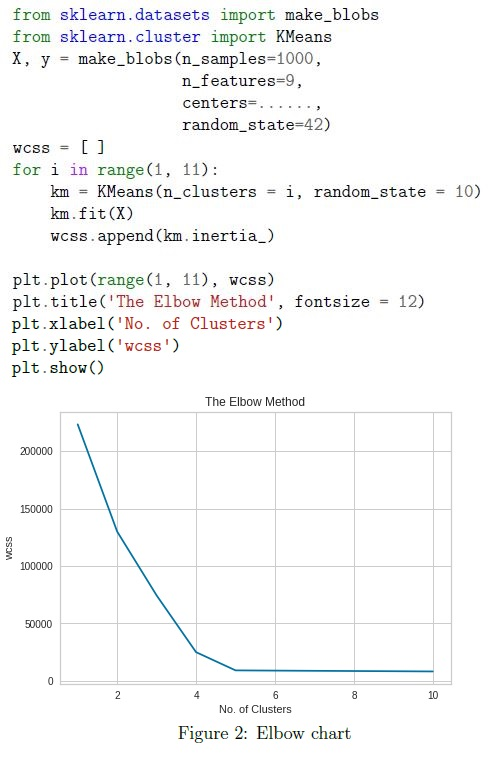 Consider the following code snippet. What value should we fill at the blank place, so that given code block creates graph as shown below:
- 2
- 4
- 5
- 6
- 10
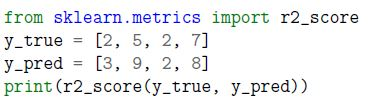 Calculate the coefficient of determination (R2) [up to 1 decimal point] based on the following block of code.
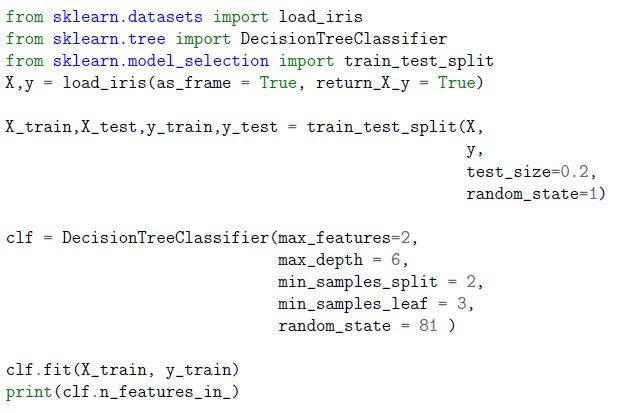 In the given block of code, the Iris dataset having shape (150,4) has been loaded for model training. What do you think will be the output of the code given below?
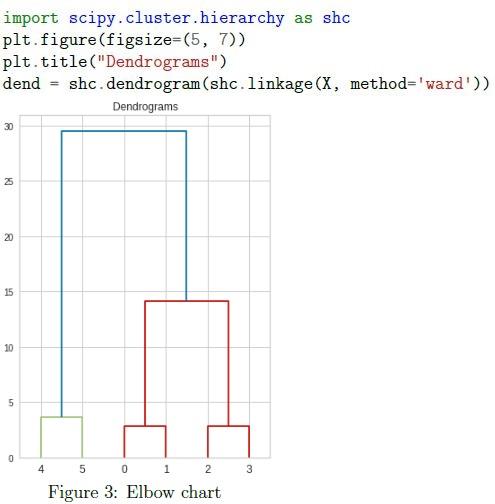 Code snippet written below plots a graph for some dataset X as shown below. In the given dendrogram which sample is most similar to the sample having label as 1 ?
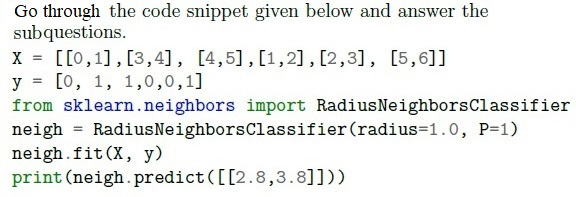
- [2]
- [0]
- [1]
- [3]
- Euclidean_distance
- Manhattan_distance
- Hamming Distance
- None of these
 What will be the output of the following code?
 What will be the output of the following code?
- (5, 12)
- (6, 11)
- (8, 15)
- (12, 8)
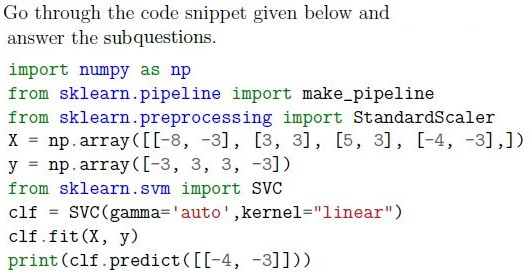
- [3]
- [-1]
- [1]
- [-3]
 Which of the following is likely to be the correct output:
- array([[-8., -3.], [ 3., 3.]])
- array([[-4., -3.], [ 3., 3.]])
- array([[-4., -3.], [ 5., 3.]])
- array([[-8., -3.], [ 5., 3.]])
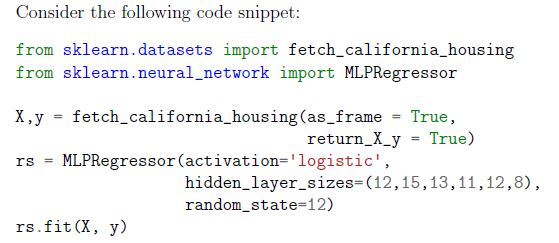
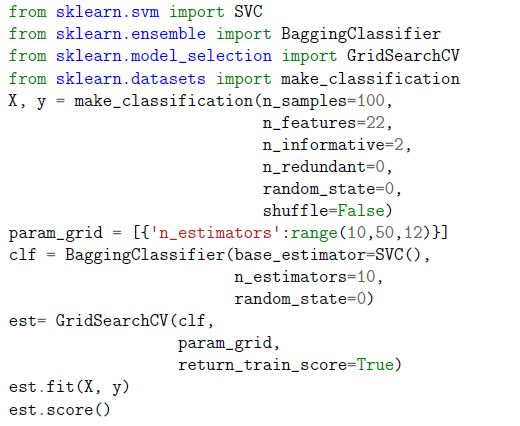
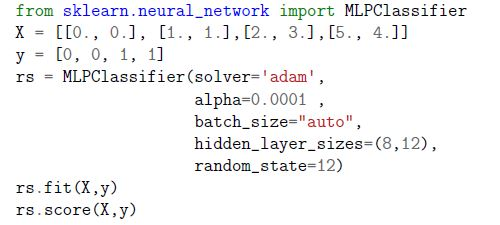 Which of the following is/are true about the following block of the code?
- Given dataset belongs to binary classification.
- Number of neurons in the 1st hidden layer is 8.
- Strength of the L1 regularization term is 0.0001
- The activation function for the output layer in the given code is the ′logistic′function.
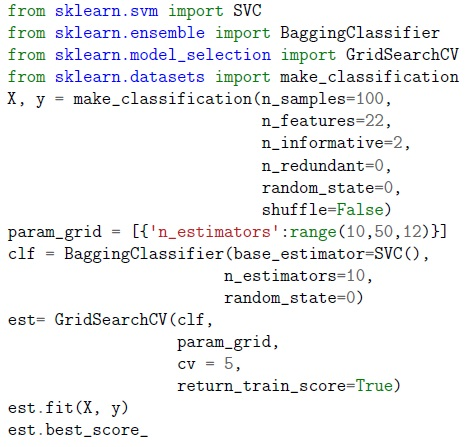
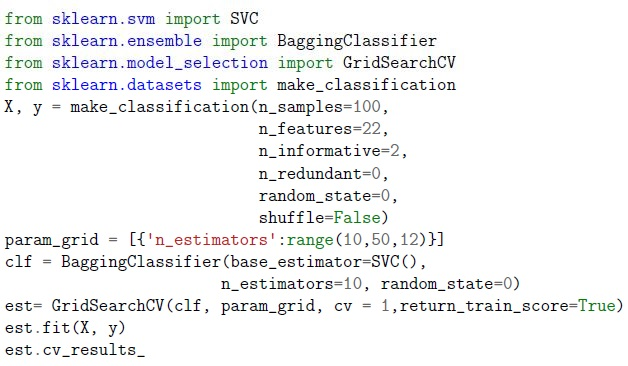

Answer key
- Q1 (MCQ, 0 marks): A
- Q2 (MCQ, 2 marks): B
- Q3 (MCQ, 2 marks): B
- Q4 (MCQ, 2 marks): A
- Q5 (MCQ, 2 marks): D
- Q6 (MCQ, 2 marks): A
- Q7 (MCQ, 2 marks): C
- Q8 (MCQ, 2 marks): D
- Q9 (MCQ, 2 marks): D
- Q10 (MCQ, 2 marks): B
- Q11 (MCQ, 2 marks): A
- Q12 (MCQ, 2 marks): A
- Q13 (MCQ, 2 marks): B
- Q14 (MCQ, 2 marks): C
- Q15 (MCQ, 2 marks): A
- Q16 (MCQ, 2 marks): D
- Q17 (MCQ, 2 marks): A
- Q18 (MCQ, 2 marks): B
- Q19 (MCQ, 2 marks): D
- Q20 (MSQ, 2 marks): A, C, D
- Q21 (MSQ, 2 marks): A, C, D
- Q22 (MSQ, 2 marks): A, C
- Q23 (MCQ, 3 marks): A
- Q24 (MCQ, 3 marks): A
- Q25 (MCQ, 3 marks): B
- Q26 (MCQ, 3 marks): C
- Q27 (MCQ, 3 marks): D
- Q28 (MCQ, 3 marks): C
- Q29 (MCQ, 3 marks): D
- Q30 (MCQ, 3 marks): C
- Q31 (SA, 3 marks): -0.05 to 0.05
- Q32 (SA, 3 marks): 4
- Q33 (SA, 3 marks): 0
- Q34 (MCQ, 3 marks): C
- Q35 (MCQ, 2 marks): A
- Q36 (SA, 2 marks): 8
- Q37 (MCQ, 3 marks): D
- Q38 (MCQ, 3 marks): D
- Q39 (MCQ, 3 marks): B
- Q40 (MSQ, 4 marks): A, B, D
- Q41 (MSQ, 5 marks): B, C
Concepts this paper tests
Auto-generated summary from the source site. Handy as a checklist; the lessons above explain each idea from scratch.
Here’s a structured summary of core topics, concepts, principles, and equations essential for the Diploma Level: Machine Learning Practice exam, along with Mermaid knowledge graphs to visualize relationships.
Core Topics & Concepts
1. Scikit-Learn Fundamentals
Key Concepts:
Datasets:
load_*(e.g.,load_wine,load_iris) andfetch_*(e.g.,fetch_california_housing) return aBunchobject (dictionary-like with keys likedata,target,feature_names).make_blobsgenerates synthetic datasets for clustering/classification.- Parameters:
n_samples,centers,n_features,random_state. - Output shape:
(n_samples, n_features).
- Parameters:
Data Preprocessing:
Scaling:
StandardScaler: Standardizes features (mean=0, std=1).scaler.mean_: Mean of training data.scaler.transform(X): Applies scaling.
MaxAbsScaler: Scales by maximum absolute value (preserves sparsity).add_dummy_feature: Adds a column of 1s (bias term) toX.
Encoding:
MultiLabelBinarizer: Converts multi-label data to binary matrix.PolynomialFeatures: Generates polynomial/interaction features.degree=2,interaction_only=True: Includes only interactions (e.g., ), not squares ().
Model Evaluation:
Cross-Validation:
LeaveOneOut: Splits data inton_samplesfolds (each sample is a test set once).train_test_split: Splits data into train/test sets.
Metrics:
r2_score: Coefficient of determination ().confusion_matrix: TP, TN, FP, FN for classification.- Recall: .
- ROC Curve: Plots TPR vs. FPR (perfect classifier: TPR=1, FPR=0).
Equations:
- Standard Scaling:
where = mean, = standard deviation.
- MaxAbs Scaling:
- Polynomial Features (degree=2):
(If interaction_only=True, excludes squares.)
- R² Score:
- Recall:
2. Supervised Learning
Key Models:
Linear Models:
LinearRegression: Fits linear coefficients via OLS.LogisticRegression: Binary/multi-class classification (usessoftmaxfor multi-class).SGDRegressor: Linear regression with stochastic gradient descent.shuffle=True: Shuffles data each epoch.
Perceptron: Linear classifier (converges if data is linearly separable).RidgeCV: Ridge regression with built-in cross-validation foralpha.
Tree-Based Models:
DecisionTreeClassifier:- Hyperparameters:
max_depth,min_samples_split,min_samples_leaf. n_features_in_: Number of features in training data.
- Hyperparameters:
RandomForestClassifier: Ensemble of decision trees.
Neural Networks:
MLPClassifier/MLPRegressor:hidden_layer_sizes: Tuple specifying neurons per layer (e.g.,(8, 12)).activation:'logistic','relu', etc.out_activation_: Always'softmax'for classification (even ifactivation='logistic').n_layers_: Total layers = input + hidden + output.
Support Vector Machines (SVM):
SVC(kernel='linear'): Linear kernel.support_vectors_: Training samples defining the decision boundary.
Equations:
- Linear Regression Prediction:
- Logistic Regression (Binary):
where = sigmoid function.
- Softmax (Multi-Class):
- Decision Tree Split Criterion (Gini Impurity):
where = proportion of class .
- SVM Decision Function (Linear):
Support vectors satisfy .
3. Unsupervised Learning
Key Models:
Clustering:
KMeans:n_clusters: Number of clusters.inertia_: Sum of squared distances to nearest cluster center (WCSS).- Elbow Method: Plot
inertia_vs.n_clustersto find optimal .
Hierarchical Clustering:
sch.dendrogram: Visualizes cluster merges.method='ward': Minimizes variance when merging clusters.
Dimensionality Reduction:
PCA:n_components: Number of principal components.explained_variance_ratio_: Proportion of variance explained by each PC.- For , PCA returns
[1., 0.](all variance in 1st PC).
Equations:
- PCA Transformation:
where = eigenvectors of .
- K-Means Objective (WCSS):
where = cluster centroids.
4. Model Evaluation & Selection
Key Concepts:
Cross-Validation:
GridSearchCV: Exhaustive search over hyperparameters.VotingClassifier: Combines multiple models (e.g., logistic regression + random forest).voting='hard': Majority vote.voting='soft': Predicts class with highest average probability.
Metrics:
- Confusion Matrix: TP, FP, FN, TN.
- Dummy Regressor: Baseline model (e.g.,
strategy='mean'predicts the mean ofy).
Equations:
- Accuracy:
- F1 Score:
5. Scikit-Learn API Design
Key Principles:
Consistency:
- All estimators have
fit(),predict(),transform(), orscore()methods. - Hyperparameters are set at initialization (e.g.,
model = SVC(C=1.0)).
- All estimators have
Composition:
Pipeline: Chains transformers and estimators.FeatureUnion: Applies multiple transformers in parallel.
Inspection:
- Attributes end with
_(e.g.,coef_,feature_importances_).
- Attributes end with
2. Supervised Learning Workflow
3. Unsupervised Learning
4. Model Evaluation & Selection
5. Scikit-Learn API Design
Key Takeaways for the Exam
Scikit-Learn Syntax:
load_*/fetch_*returnBunchobjects.make_blobsgenerates synthetic data with shape(n_samples, n_features).- Always check
shape(e.g.,data.data.shape, notdata.data.shape()).
Preprocessing:
StandardScalercenters and scales data.PolynomialFeatures(degree=2, interaction_only=True)generates .
Models:
LogisticRegressionusessoftmaxfor multi-class.MLPClassifier’sout_activation_is alwayssoftmax.DecisionTreeClassifier’sn_features_in_= number of input features.
Evaluation:
LeaveOneOutgeneratesn_samplessplits.explained_variance_ratio_for PCA sums to 1.- Perfect ROC curve: TPR=1 at FPR=0.
API Design:
- Hyperparameters are set at initialization.
- Use
Pipelinefor chaining steps,FeatureUnionfor parallel transformations.