Home / Past papers / MLP End Term / this paper
IIT M IMPROVEMENT AN EXAM QIC3 31 Aug - 31 Aug 2025
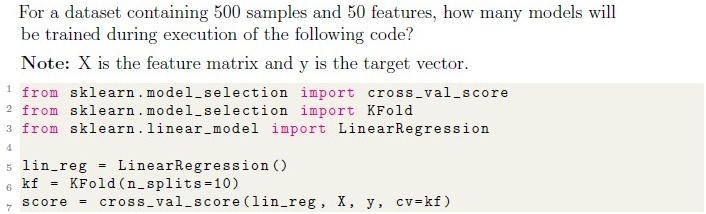
- 10
- 50
- 100
- 500
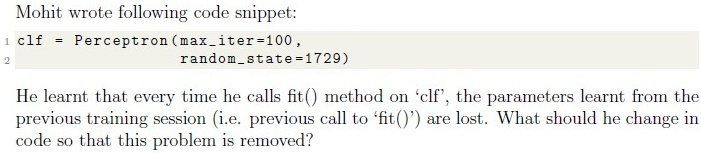
- Set ‘warm start=True’
- Combine training data from different training sessions
- Set ‘retain parameters=True’
- This problem can not be solved.

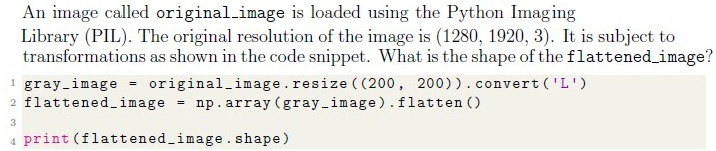
- (200, 200, 3)
- (40000, )
- (200, 200, 1)
- (40000, 3)





- The test is used to detect seasonality in a time series
- A low p-value (e.g., < 0.05) indicates the time series is non-stationary
- The test’s null hypothesis is that the time series is stationary
- A low p-value (e.g., < 0.05) indicates the time series is stationary





- liblinear
- lbfgs
- saga
- newton-cg






- The series is a product of a trend component and an error component only
- The series is a sum of a trend component, a seasonal component, and acyclical component
- The series is a product of a trend component, a seasonal component, and anerror component
- The series is a sum of a trend component, a seasonal component, and a errorcomponent

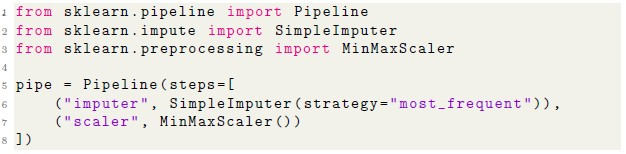

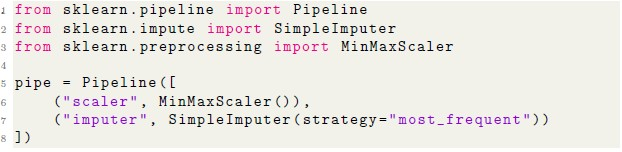


- Saves computation time by reusing results of expensive transformations wheninputs and parameters have not changed.
- Helps speed up repeated runs of cross-validation involving the sametransformation steps.
- Reduces CPU usage by running transformations in parallel threadsautomatically.
- Improves efficiency in hyperparameter search by avoiding redundantcomputations in pipeline steps.
- Guarantees better generalization performance on the test set.




- accuracy
- precision
- recall
- F-1 score

- The elbow method involves plotting the number of clusters against the inertiaand identifying a point where the decrease in inertia slows down.
- The elbow point represents the cluster count beyond which additional clustersdo not significantly improve the model fit.
- The metric used in the elbow method is the silhouette score.
- The elbow point is always the smallest number of clusters in the plot.
- The elbow method may sometimes be inconclusive if no clear bend is visible inthe curve.
















Answer key
- Q1 (MCQ, 2 marks): A
- Q2 (MCQ, 2 marks): A
- Q3 (MCQ, 2 marks): A
- Q4 (MCQ, 2 marks): B
- Q5 (MCQ, 2 marks): A
- Q6 (MCQ, 2 marks): D
- Q7 (MCQ, 1 marks): A
- Q8 (MCQ, 1 marks): C
- Q9 (MCQ, 1 marks): A
- Q10 (MCQ, 3 marks): C
- Q11 (MSQ, 3 marks): A, B
- Q12 (MSQ, 2 marks): A, B, D
- Q13 (MSQ, 2 marks): A, B, C
- Q14 (MSQ, 2 marks): B, C, D
- Q15 (MSQ, 2 marks): A, B, E
- Q16 (SA, 3 marks): -12.5
- Q17 (SA, 3 marks): 10
- Q18 (MSQ, 1 marks): A, C
- Q19 (MCQ, 2 marks): A
- Q20 (MSQ, 2 marks): A, C
- Q21 (MCQ, 2 marks): D
- Q22 (MSQ, 2 marks): B, D
- Q23 (SA, 1 marks): 72
- Q24 (SA, 1 marks): 0.97 to 0.99
- Q25 (SA, 1 marks): 0.81 to 0.83
- Q26 (SA, 3 marks): 4.1 to 4.3
Concepts this paper tests
Auto-generated summary from the source site. Handy as a checklist; the lessons above explain each idea from scratch.
Here’s a structured summary of core topics, concepts, principles, and equations for the Diploma-Level Machine Learning Practice (Computer-Based Exam), along with Mermaid knowledge graphs to visualize relationships.
1. Core Topics & Concepts
A. Model Training & Evaluation
Cross-Validation (K-Fold)
- Splits data into
kfolds, trainsktimes (each fold as validation once). Equation:
- Inertia (for clustering):
- -score:
Key Points:
KFold(n_splits=10)→ 10 models trained.cross_val_scorereturns scores for each fold.
- Splits data into
Model Persistence (
warm_start)warm_start=Trueretains weights between.fit()calls (e.g., inPerceptron).- Useful for incremental learning.
Confusion Matrix
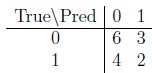
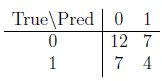
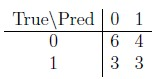
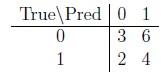
- Structure: | True\Pred | 0 | 1 | |-----------|---------|---------| | 0 | TN | FP | | 1 | FN | TP |
Metrics:
- Precision:
- Recall:
- F1:
Evaluation for Imbalanced Data
- Avoid Accuracy: Use Precision, Recall, F1, or ROC-AUC.
- Example: Rare disease (0.5% prevalence) → Accuracy is misleading.
B. Preprocessing & Feature Engineering
Image Processing
- Resize:
(1280, 1920, 3) → (200, 200)(grayscale). - Flatten:
(200, 200) → (40000,). Equation:
- Grayscale conversion: .
- Resize:
Text Vectorization (TF-IDF)
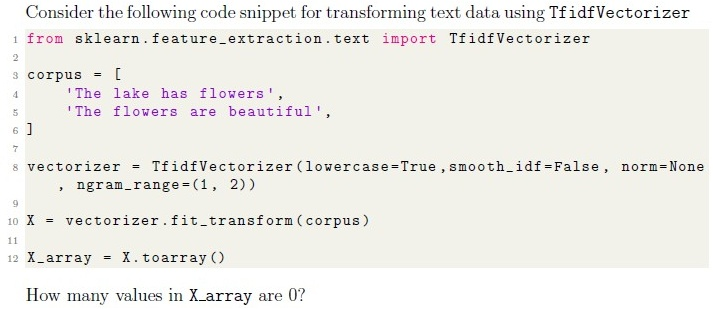
TF-IDF:
- : Term frequency in document .
- : (N = total docs, DF = doc frequency).
- Sparsity: Most entries in
X_arrayare 0 (e.g., 10 zeros in the example).
Handling Missing Data
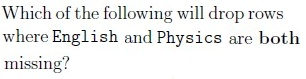
SimpleImputer(strategy='most_frequent'): Replaces NaN with mode.dropna(subset=["col1", "col2"], how="all"): Drops rows where all specified columns are NaN.
Feature Scaling
- MinMaxScaler:
- StandardScaler:
C. Algorithms & Hyperparameters
Linear Models
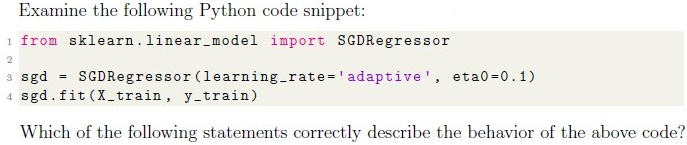
SGDRegressor:
loss='huber'(robust to outliers).learning_rate='adaptive': Reduces LR if loss doesn’t improve.- Huber Loss:
Neural Networks (MLP)
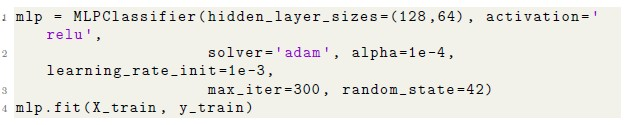
MLPClassifier:
hidden_layer_sizes=(128, 64): 2 hidden layers (128 and 64 neurons).activation='relu': .solver='adam': Adaptive Moment Estimation (optimization).- Elastic Net in LogisticRegression: Requires
solver='saga'.
Clustering (K-Means)
- Elbow Method: Plot inertia vs. ; choose at the "elbow."
- Inertia: Sum of squared distances to nearest cluster center.
- Silhouette Score: (a = intra-cluster distance, b = inter-cluster distance).
Time Series
ADF Test:
- Null hypothesis: Time series is non-stationary.
- Low p-value (e.g., < 0.05): Reject null → series is stationary.
Decomposition:
- Additive: .
- Multiplicative: .
Collaborative Filtering
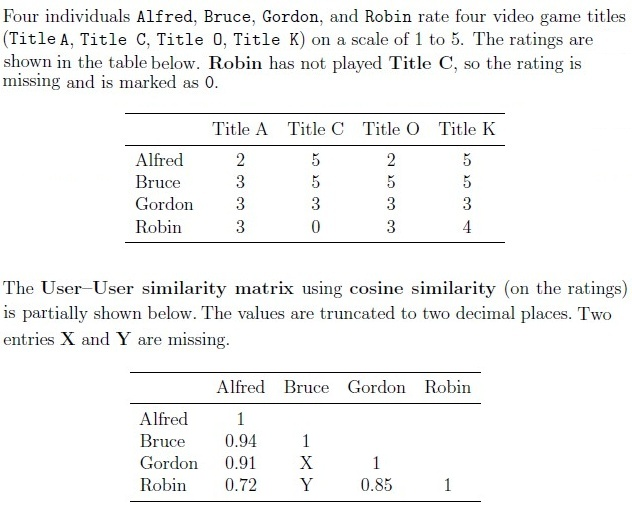
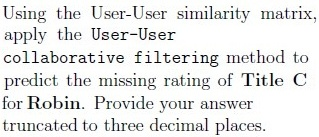
- Cosine Similarity:
- Prediction: Weighted average of similar users' ratings.
D. Pipelines & Grid Search
Pipeline
Example:
Pipeline([ ('imputer', SimpleImputer(strategy='most_frequent')), ('scaler', MinMaxScaler()) ])- Caching:
memory='path'stores intermediate results to speed up repeated runs.
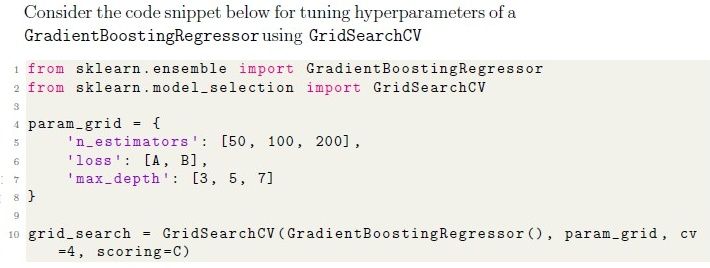
GridSearchCV
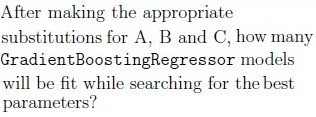
Total Models: Product of hyperparameter values.
- Example:
n_estimators=[50,100,200],loss=['squared_error','huber'],max_depth=[3,5,7]→ models.
- Example:
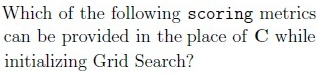
Scoring Metrics:
- Regression:
neg_mean_absolute_error,r2. - Classification:
precision,recall,f1,roc_auc.
- Regression:
E. Pandas Operations
Filtering
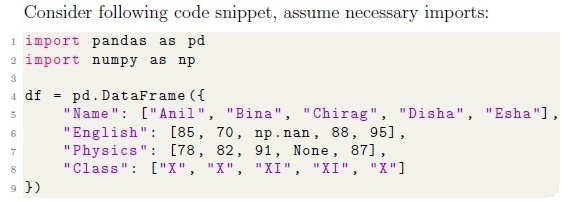
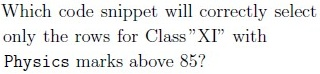
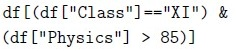
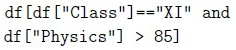
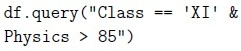
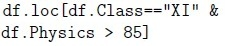
df[(df['Class'] == 'XI') & (df['Physics'] > 85)]df.query('Class == "XI" & Physics > 85')
Aggregations
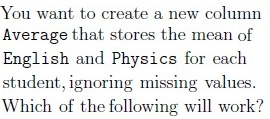
df[['English', 'Physics']].mean(axis=1, skipna=True)df.assign(Average=lambda x: x[['English', 'Physics']].mean(axis=1))
Graph 2: Preprocessing Workflow
Graph 3: Algorithm Selection
Graph 4: Hyperparameter Tuning
Graph 5: Time Series Analysis
3. Key Equations Summary
| Concept | Equation |
|---|---|
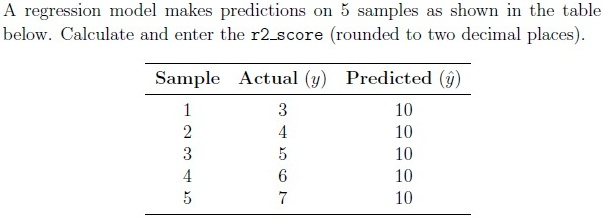
| R² Score | |
| Confusion Matrix | TP, FP, TN, FN |
| Precision | |
| Recall | |
| F1 Score | |
| TF-IDF | |
| Cosine Similarity | |
| MinMax Scaling | |
| Standard Scaling | |
| Huber Loss | Piecewise quadratic/linear (see above) |
| K-Means Inertia | |
| ADF Test Null Hypothesis | Time series is non-stationary |
| Collaborative Filtering | Weighted average of similar users' ratings |
4. Exam Tips
- Cross-Validation: Always count models as
n_splits(e.g., 10-fold → 10 models). - Imbalanced Data: Avoid accuracy; prioritize precision, recall, F1.
- Pipelines: Order matters (e.g., impute → scale).
- GridSearchCV: Total models = product of hyperparameter options.
- TF-IDF: Expect sparse matrices (many zeros).
- Time Series: ADF p-value < 0.05 → stationary.
- Cosine Similarity: Ignore missing values (treat as 0 in dot product).
- Elbow Method: Look for the "bend" in inertia plot.