Home / Past papers / MLF Quiz 1 / this paper
2024 July07: IIT M AN EXAM QDF4 - 07 Jul 2024
Elapsed 00:00
Comprehension passage - the questions below it refer to this
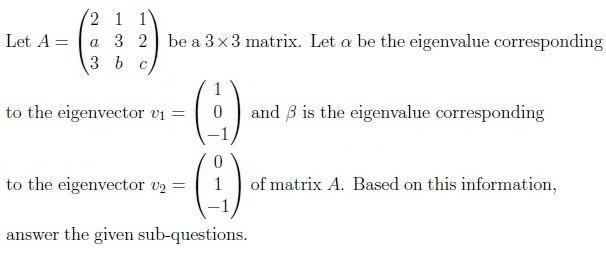
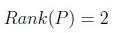
Find the value of α + 2β.
Which of the following options is/are true ?


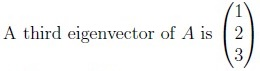
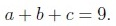
Comprehension passage - the questions below it refer to this

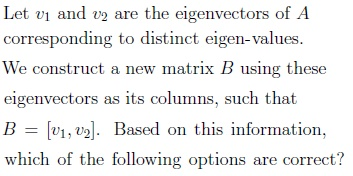
Which of the following options is/are true?
- A is a symmetric matrix.
- A is a diagonal matrix.
- A is orthogonally diagonalizable.
- Eigenvalues of A are -1, -1 and 2.










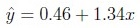


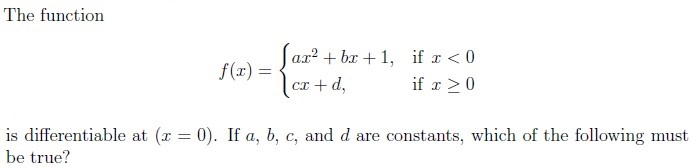




Which of the following statements is true for a function f(x, y) that is differentiable at a point (a, b)?
- The directional derivative exists in every direction.
- The directional derivative is the same in every direction.
- The directional derivative can only be calculated along the axes.
- The directional derivative does not exist.
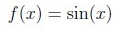
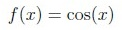
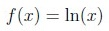
Which of the following functions cannot be approximated linearly around x = 0?


Consider a dataset from an e-commerce company such as Flipkart that has details of customer behavior, which of the following problems can be best approached using clustering?
- Predicting the exact number of sales for each customer segment.
- Classifying customers into segments based on labeled customer data.
- Identifying inherent groupings in customer data without predefined labels.
- Reducing the number of features in the customer dataset.
Concepts this paper tests
Auto-generated summary from the source site. Handy as a checklist; the lessons above explain each idea from scratch.
Summary of Core Topics, Concepts, Principles, and Equations
Mathematics
Matrices and Eigenvalues
- Eigenvalues and Eigenvectors: For a matrix , if , then is an eigenvalue and is the corresponding eigenvector.
- Projection Matrix:
- Properties of Projection Matrix: Symmetric, Idempotent, Singular.
- Rank and Null Space: Rank of a matrix, null space, column space.
Differentiability and Continuity
- Differentiability Conditions: For a function to be differentiable at a point, it must be continuous and have a well-defined derivative at that point.
- Directional Derivatives: Existence and calculation in different directions.
Linear Approximation
- Linear Approximation: Approximating functions linearly around a point.
- Gradient:
- Length of Gradient:
Least Squares Method
- Best-Fit Line: Finding the line that minimizes the sum of squared residuals.
Data Science
Classification Models
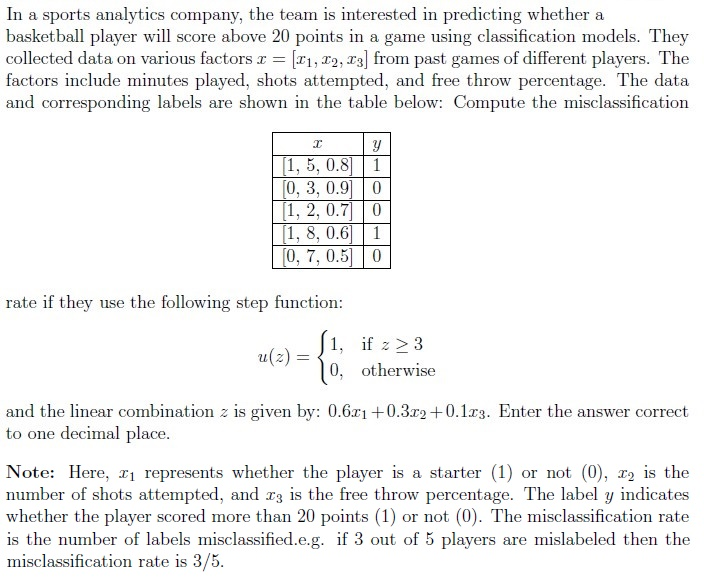
- Misclassification Rate: Calculating the rate of misclassified labels.
- Step Function:
Clustering
- Clustering Techniques: Identifying inherent groupings in data without predefined labels.
Equations
- Eigenvalue Equation:
- Projection Matrix:
- Gradient:
- Length of Gradient:
- Least Squares Method: Minimizing
- Misclassification Rate: