Home / Past papers / MLF End Term / this paper
IIT M FOUNDATION ET1 EXAM QPF2 S1 03 Sep - 03 Sep 2023
Elapsed 00:00
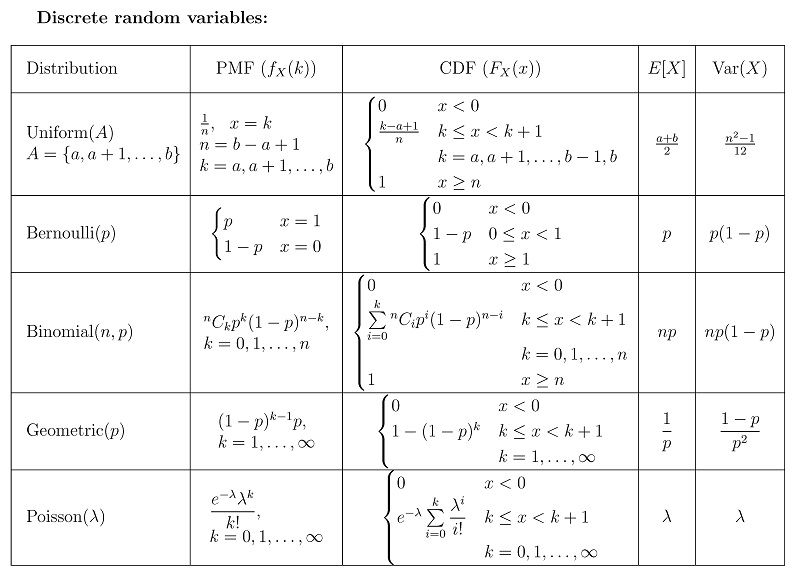
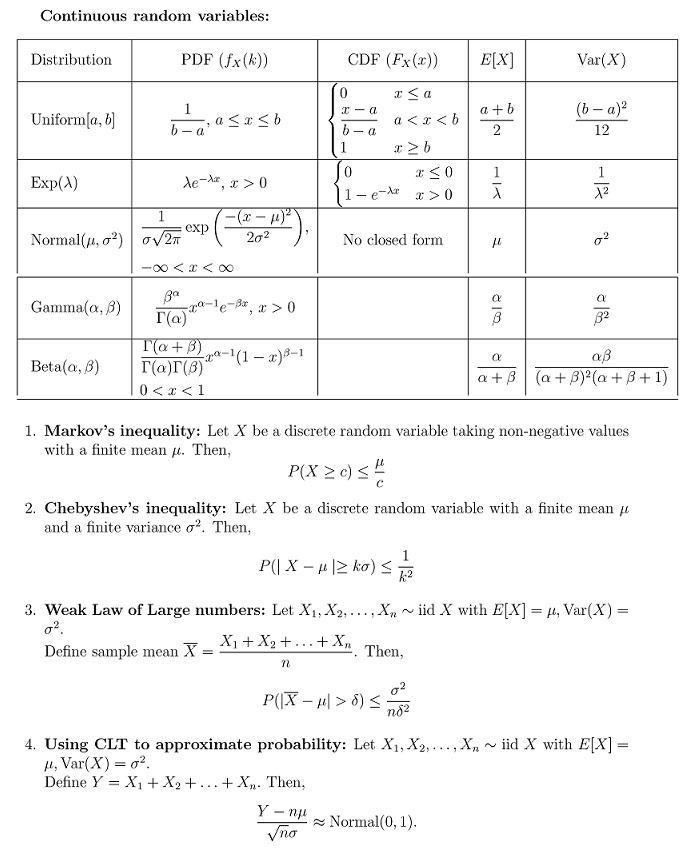
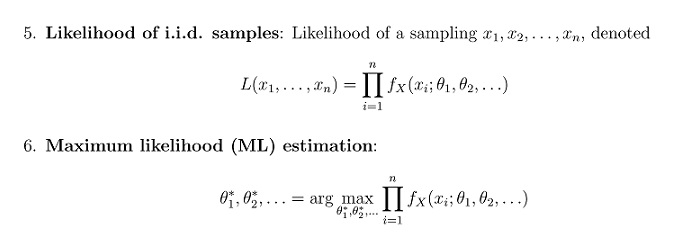
- Useful Data has been mentioned above.
- This data attachment is just for a reference & not for an evaluation.
Which of the following statements accurately describes the key difference between classification and regression models?
- In classification, the output variable is continuous and real-valued, while inregression, it is categorical.
- Regression models are used for predicting probabilities, whereas classificationmodels focus on predicting absolute values.
- Classification models aim to find decision boundaries to separate data intoclasses, while regression models seek to predict a numeric value.
- In regression, the commonly used loss function is mean squared error, whilein classification, 0 -1 loss is typically employed.
Comprehension passage - the questions below it refer to this
Based on the above data, answer the given subquestions.



- b1 − b2 + b3 = 0
- b1 + b2 + b3 = 0
- 2b1 − b2 + b3 = 0
- 2b1 + b2 + b3 = 0
A consumer wants to maximize his utility subject to some constraints. He consumes two goods g1 and g2 and the utility function is the sum of g1 and g2. His budget is Rs.100. The per unit price of goods g1 and g2 are Rs.3 and Rs.4 respectively. Chose the correct optimization problem.





- A − I (where I is the identity matrix of the same size) is also orthogonal.
- Both AB and BA are orthogonal.
- An and Bn are orthogonal for every n > 1.
- A and B are also symmetric matrices.
Which of the following statements is/are true for a real symmetric matrix A?
- AT A and AAT have the same rank.
- AT A and AAT have the same eigenvalues
- AT A and AAT have the same eigenvectors.
- AT A and AAT have the same singular values.
Which of the following matrices is/are Unitary but not Hermitian?

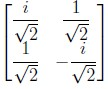
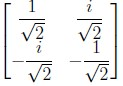

Which among the following is true for PCA?
- The first principal component represents the direction along which thevariance of the dataset is maximized.
- The first principal component represents the direction along which thevariance of the dataset is minimized.
- The first principal component is the eigenvector corresponding to the smallesteigenvalue of the covariance matrix.
- The first principal component is the eigenvector corresponding to the largesteigenvalue of the covariance matrix.
Which of the following statements regarding gradient descent is/are correct?
- If the step size is chosen as 1, we may “not always” arrive as close to theoptimal solution even after many number of iterations.
- Solution obtained for optimization problem is the local minimum of itsobjective function.
- Solution obtained for optimization problem is the global minimum of itsobjective function.
- Gradient descent converges to the global optimum in the case of convexfunctions.
- Gradient descent does not converge to the global optimum in the case ofconvex functions.
Suppose a fair coin is tossed twice. Let A denote the event that the first toss is a tail. Let B denote the event that the second toss is a tail. Let C denote the event that out of the first two tosses, either both are heads or both are tails. Which among the following options are true? Select all that apply.
- A, B and C are independent.
- A, B and C are dependent.
- A, B and C are pairwise independent.
- P(A) = P(B) = P(C) = 1/2


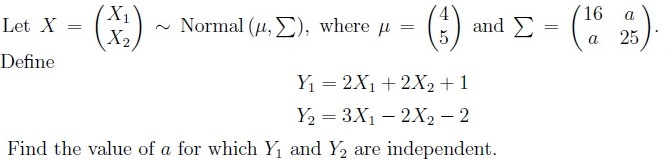
The average life (in years) of an electric bulb follows exponential distribution with parameter λ = 0.4. Using Weak Law of large numbers, find a lower bound on the probability that the mean life of a random sample of 50 such bulbs falls between 1.5 and 3.5 years. Enter your answer correct to three decimal places.






Answer key
- Q1 (MCQ, 0 marks): A
- Q2 (MSQ, 2 marks): C, D
- Q3 (SA, 2 marks): 0
- Q4 (SA, 1 marks): 7.44 to 7.52
- Q5 (MCQ, 3 marks): C
- Q6 (MCQ, 3 marks): A
- Q7 (MSQ, 4 marks): B, C
- Q8 (MSQ, 4 marks): A, B, D
- Q9 (MSQ, 3 marks): A, D
- Q10 (MSQ, 3 marks): A, D
- Q11 (MSQ, 3 marks): A, B, D
- Q12 (MSQ, 3 marks): B, C, D
- Q13 (SA, 2 marks): 225
- Q14 (SA, 3 marks): 1
- Q15 (SA, 3 marks): 40
- Q16 (SA, 3 marks): 0.870 to 0.880
- Q17 (MCQ, 4 marks): C
- Q18 (MCQ, 4 marks): A
Concepts this paper tests
Auto-generated summary from the source site. Handy as a checklist; the lessons above explain each idea from scratch.
Here’s a structured summary of core topics, concepts, principles, and equations for the exam, followed by Mermaid knowledge graphs to visualize relationships.
1. Core Topics & Concepts
A. Probability & Statistics
1. Random Variables & Distributions
Discrete Distributions:
- Uniform (Discrete): PMF, CDF, Mean, Variance.
- Bernoulli: PMF, CDF, Mean (
p), Variance (p(1-p)). - Binomial: PMF (
nCk p^k (1-p)^(n-k)), Mean (np), Variance (np(1-p)). - Geometric: PMF (
(1-p)^(k-1) p), Mean (1/p), Variance((1-p)/p^2). - Poisson: PMF (
(e^-λ λ^k)/k!), Mean (λ), Variance (λ).
Continuous Distributions:
- Uniform (Continuous): PDF (
1/(b-a)), CDF, Mean ((a+b)/2), Variance ((b-a)^2/12). - Exponential: PDF (
λ e^(-λx)), CDF (1 - e^(-λx)), Mean (1/λ), Variance (1/λ^2). - Normal: PDF (
(1/(σ√(2π))) exp(-(x-μ)^2/(2σ^2))), Mean (μ), Variance (σ^2). - Gamma: PDF (
(β^α x^(α-1) e^(-βx))/Γ(α)), Mean (α/β), Variance (α/β^2). - Beta: PDF (
Γ(α+β)/(Γ(α)Γ(β)) x^(α-1) (1-x)^(β-1)), Mean (α/(α+β)).
- Uniform (Continuous): PDF (
2. Inequalities & Theorems
- Markov’s Inequality:
P(X ≥ c) ≤ μ/c(for non-negativeX). - Chebyshev’s Inequality:
P(|X - μ| ≥ kσ) ≤ 1/k^2. - Weak Law of Large Numbers (WLLN):
P(|X̄ - μ| > δ) ≤ σ^2/(nδ^2)(convergence in probability). - Central Limit Theorem (CLT):
(Y - nμ)/√(nσ) ~ N(0,1)(for i.i.d. samplesY = ΣX_i).
3. Maximum Likelihood Estimation (MLE)
- Likelihood Function:
L(θ) = Π f_X(x_i; θ). - MLE:
θ* = argmax_θ L(θ).
4. Independence & Dependence
- Pairwise Independence:
P(A ∩ B) = P(A)P(B). - Mutual Independence:
P(A ∩ B ∩ C) = P(A)P(B)P(C). - Example: Coin tosses (Q13) show pairwise independence but mutual dependence.
B. Linear Algebra
1. Matrix Properties
- Orthogonal Matrices:
A^T A = I(preserves norms,ABis orthogonal ifA, Bare). - Symmetric Matrices:
A = A^T, eigenvalues real, eigenvectors orthogonal. Eigenvalues/Eigenvectors:
Av = λv.- Symmetric matrices:
A^T AandAA^Tshare non-zero eigenvalues.
- Singular Values: Square roots of eigenvalues of
A^T A. - Unitary Matrices:
U^H U = I(complex analog of orthogonal). - Hermitian Matrices:
A = A^H(self-adjoint).
2. Systems of Linear Equations
Consistency Condition:
Ax = bhas a solution iffbis in the column space ofA.- Example (Q6):
2b₁ - b₂ + b₃ = 0for solvability.
- Example (Q6):
3. PCA (Principal Component Analysis)
- First PC: Direction of maximum variance (eigenvector of largest eigenvalue of covariance matrix).
- Dimensionality Reduction: Project data onto top
keigenvectors.
C. Optimization
1. Gradient Descent
- Update Rule:
x_(k+1) = x_k - α ∇f(x_k). Convergence:
- Convex Functions: Guaranteed to global optimum.
- Non-Convex: May converge to local minima.
- Step Size (
α): Too large → divergence; too small → slow convergence. - Example (Q14): 2 iterations of GD on
f(x₁,x₂) = 8x₁² + 2x₁x₂ - x₂².
2. Constrained Optimization (KKT Conditions)
KKT Conditions (for
min f(x)s.t.g_i(x) ≤ 0):- Stationarity:
∇f(x*) + Σ λ_i ∇g_i(x*) = 0. - Primal Feasibility:
g_i(x*) ≤ 0. - Dual Feasibility:
λ_i ≥ 0. - Complementary Slackness:
λ_i g_i(x*) = 0.
- Stationarity:
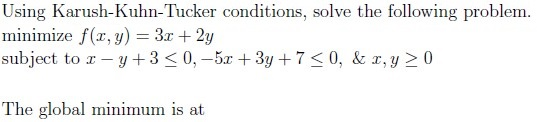
- Example (Q18): Minimize
3x + 2ywith linear constraints.
3. Directional Derivatives & Gradients
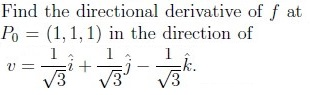
- Directional Derivative:
D_v f = ∇f · v(rate of change in directionv). - Maximum Rate of Change:
||∇f||(direction of gradient). Example (Q4-Q5):
- Directional derivative of
f(x,y,z) = x² + 2y² - 3z²at(1,1,1)in directionv. - Maximum rate of change =
√(∇f·∇f) ≈ 7.48.
- Directional derivative of
D. Machine Learning Foundations
1. Classification vs. Regression
| Aspect | Classification | Regression |
|---|---|---|
| Output | Categorical (discrete classes) | Continuous (real-valued) |
| Goal | Decision boundaries (e.g., SVM, logistic) | Predict numeric values (e.g., linear reg.) |
| Loss Functions | 0-1 loss, cross-entropy | MSE, MAE |
2. Probabilistic Models
Exponential Distribution:
f(x) = λ e^(-λx)(memoryless property).- Example (Q17): WLLN for bulb lifetimes (
λ = 0.4).
- Example (Q17): WLLN for bulb lifetimes (
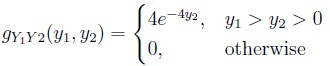
- Joint PDFs (Q19): Transformations of i.i.d. exponentials (
Y₁ = X₁ + X₂,Y₂ = X₂).
2. Key Equations
Probability & Statistics
- PMF/PDF, CDF, Mean, Variance for all distributions (see table in Q2).
- Markov’s Inequality:
P(X ≥ c) ≤ E[X]/c. - Chebyshev’s Inequality:
P(|X - μ| ≥ kσ) ≤ 1/k². - WLLN:
P(|X̄ - μ| > δ) ≤ σ²/(nδ²). - CLT:
(Y - nμ)/√(nσ) ~ N(0,1). - MLE:
θ* = argmax θ Π f(X_i; θ).
Linear Algebra
- Orthogonal Matrix:
A^T A = I. - Eigenvalue Equation:
A v = λ v. - PCA:
Covariance Matrix Σ = E[(X - μ)(X - μ)^T]. - SVD:
A = U Σ V^T.
Optimization
- Gradient Descent:
x_(k+1) = x_k - α ∇f(x_k). - Directional Derivative:
D_v f = ∇f · v. KKT Conditions:
∇f(x*) + Σ λ_i ∇g_i(x*) = 0,g_i(x*) ≤ 0,λ_i ≥ 0,λ_i g_i(x*) = 0.
Machine Learning
- Regression Loss: MSE =
(1/n) Σ (y_i - ŷ_i)². - Classification Loss: 0-1 loss, cross-entropy.