Home / Past papers / MLF Quiz 1 / this paper
IIT M DIPLOMA AN EXAM QDD3 13 July 2025 - 13 Jul 2025
Elapsed 00:00



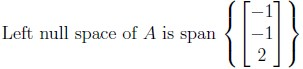
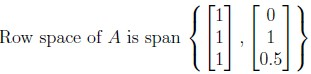
Which of the following options is/are true regarding the projection matrix?
- It is a symmetric matrix.
- It is an orthogonal matrix.
- It is orthogonally diagonalizable.
- It is always a rank 1 matrix.



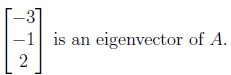
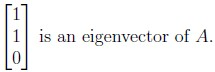

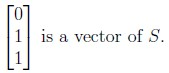
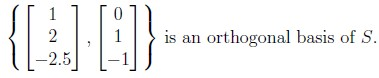

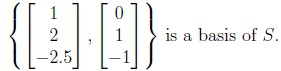
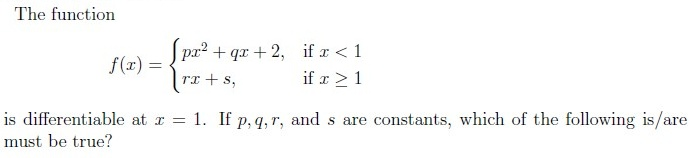


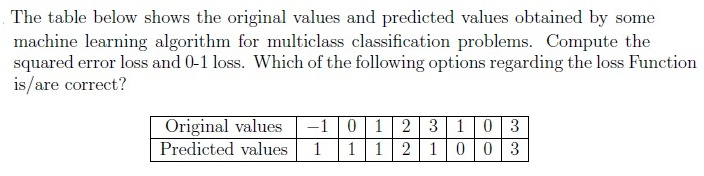
- Square error loss ≤ 0-1 loss
- Square error loss ≥ 0-1 loss
- The 0-1 loss is 0.25
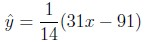
- The square error loss is 1.25

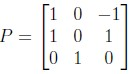
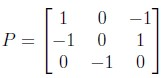
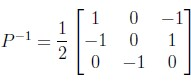

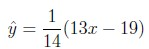


Comprehension passage - the questions below it refer to this

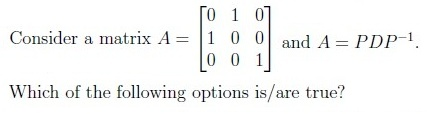
Which of the following options is/are true?
- A* = A, where A* is conjugate transpose of matrix A.
- A is a symmetric matrix.
- A is a unitary matrix.
- Columns of A are not orthogonal.
Which of the following options is/are true ?




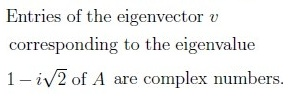
Which of the following options is/are true ?



Which of the following is/are true?





A hospital collects patient data including symptoms, vital signs, and lab test results. They want to find patterns to improve treatment plans. What type of task is clustering most suitable for?
- Predicting the recovery time for a new patient.
- Diagnosing diseases based on labeled medical records.
- Grouping patients with similar symptoms and test results without prior labels.
- Determining the most important variable for predicting disease.
Answer key
- Q1 (MSQ, 3 marks): A, C, D
- Q2 (MSQ, 3 marks): A, C
- Q3 (MSQ, 3 marks): A, B, C
- Q4 (MSQ, 3 marks): B, D
- Q5 (MSQ, 3 marks): A, D
- Q6 (MSQ, 3 marks): A, D
- Q7 (MSQ, 3 marks): A, B
- Q8 (MSQ, 4 marks): C, D
- Q9 (MSQ, 2 marks): B, D
- Q10 (MSQ, 3 marks): A, B
- Q11 (MSQ, 3 marks): A, B, C
- Q12 (MSQ, 2 marks): A, C, D
- Q13 (SA, 3 marks): 1.6251 to 1.6258
- Q14 (MCQ, 2 marks): C
Concepts this paper tests
Auto-generated summary from the source site. Handy as a checklist; the lessons above explain each idea from scratch.
Summary of Core Topics, Concepts, Principles, and Equations
Linear Algebra
Matrix Properties and Operations
- Eigenvalues and Eigenvectors: For a matrix , if , then is an eigenvalue and is the corresponding eigenvector.
- Matrix Diagonalization: , where is a diagonal matrix.
- Orthogonal and Orthonormal Matrices: A matrix is orthogonal if .
- Symmetric Matrices: A matrix is symmetric if .
- Projection Matrices: A projection matrix is symmetric () and idempotent ().
Vector Spaces and Subspaces
- Basis and Dimension: A basis for a vector space is a set of linearly independent vectors that span the space. The dimension is the number of vectors in the basis.
- Null Space and Column Space: The null space of a matrix is the set of all vectors such that . The column space is the span of the columns of .
- Orthogonal Basis: A set of vectors is orthogonal if each pair of vectors is perpendicular.
Special Matrices
- Unitary Matrices: A matrix is unitary if , where is the conjugate transpose.
- Diagonalizable Matrices: A matrix is diagonalizable if it can be written in the form .
Calculus
Differentiability and Continuity
- Continuity: A function is continuous at a point if .
- Differentiability: A function is differentiable at a point if the derivative exists.
Linear Approximation
- Linear Approximation Formula: For a function , the linear approximation at a point is given by:
Machine Learning
Loss Functions
- Squared Error Loss:
- 0-1 Loss: if , otherwise .
Clustering
- Clustering Tasks: Suitable for grouping data points without prior labels, such as grouping patients with similar symptoms and test results.
Sequences and Series
Convergence of Sequences
- Convergent Sequences: A sequence converges to a limit if .
- Divergent Sequences: A sequence that does not converge to any finite limit.