Home / Past papers / MLF End Term / this paper
IIT M FOUNDATION DIPLOMA ENDTERM QPB2 07 Aug 2022 IBA NS - 07 Aug 2022
Elapsed 00:00

- Yes
- No
Suppose that eigenvalues of matrix A are 1, 0.5, 0.25. The determinant of (A−1)T is NOTE: Enter your answer to the nearest integer.
NOTE: Enter your answer to the nearest integer.

Comprehension passage - the questions below it refer to this
Based on the above data, answer the given subquestions.

Compute the equation of the function’s linear approximation at point (2,3). If the equation of the linear approximation is L = ax + by + c, then provide the value of a. NOTE: Enter your answer to the nearest integer.
Compute the equation of the function’s linear approximation at point (2,3). If the equation of the linear approximation is L = ax + by + c, then provide the value of b. NOTE: Enter your answer upto two decimal.
Compute the equation of the function’s linear approximation at point (2,3). If the equation of the linear approximation is L = ax + by + c, then provide the value of c. NOTE: Enter your answer upto two decimal.
Comprehension passage - the questions below it refer to this
Based on the above data, answer the given subquestions.
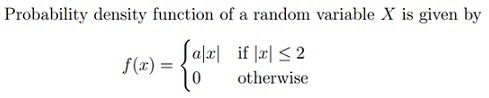
Calculate the value of a NOTE: Enter your answer upto two decimal.
NOTE: Enter your answer upto two decimal.
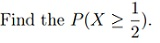
If two complex vectors v1 and v2 have lengths l1 and l2 and v1.v2 = l1l2, then which of the following statements is/are true?
- v1 and v2 vectors are parallel to each other.
- v1 and v2 vectors are conjugate to each other.
- v1 and v2 vectors are perpendicular to each other.
- v1 and v2 can be any two vectors.

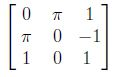
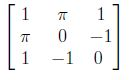
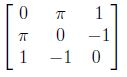
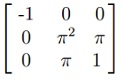






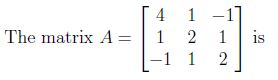
- positive definite
- positive semi-definite
- negative definite
- negative semi-definite
- None of these


Comprehension passage - the questions below it refer to this
A manufacturing company makes two types of television sets; one is smart led and the other is normal led. The company has resources to make at most 300 sets a week. It takes Rs 1800 to make a smart led set and Rs 2700 to make a normal led set. The company can spend not more than Rs 648000 a week to make television sets. If it makes a profit of Rs 510 per smart led and Rs 675 per normal led. Based on the above data, answer the given subquestions.The objective function to maximise the profit for the given problem is
- 510x + 675y
- 410x + 675y
- 510x + 575y
- 102x + 135y
The constraints for the given problem is
- x + y ≤ 300
- 2x + 3y ≤ 720
- x + 3y ≤ 120
- x ≥ 0, y ≥ 0
NOTE: Enter your answer to the nearest integer.
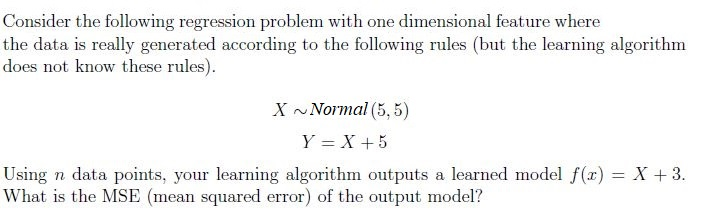
NOTE: Enter your answer in one decimal place.

NOTE: Enter your answer to the nearest integer.
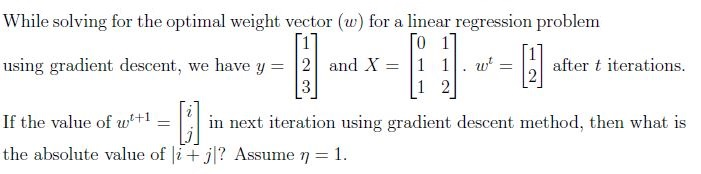
NOTE: Enter your answer upto one decimal.

NOTE: Enter your answer upto two decimal

Comprehension passage - the questions below it refer to this
Based on the above data, answer the given subquestions.
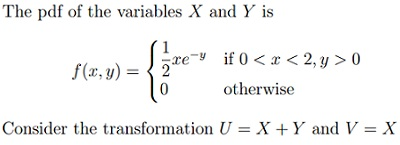
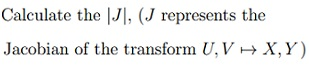



Answer key
- Q1 (MCQ, 0 marks): A
- Q2 (SA, 2 marks): 8
- Q3 (SA, 2 marks): 45
- Q4 (SA, 1 marks): -2
- Q5 (SA, 1 marks): -0.8 to -0.7
- Q6 (SA, 1 marks): 10.0 to 10.5
- Q7 (SA, 1 marks): 0.23 to 0.27
- Q8 (SA, 2 marks): 0.42 to 0.48
- Q9 (MCQ, 3 marks): A
- Q10 (MCQ, 3 marks): D
- Q11 (MCQ, 3 marks): B
- Q12 (MCQ, 2 marks): A
- Q13 (MSQ, 3 marks): A, B, C
- Q14 (MCQ, 2 marks): A
- Q15 (MSQ, 3 marks): A, B, D
- Q16 (SA, 3 marks): 4
- Q17 (SA, 3 marks): 3.5 to 4.0
- Q18 (SA, 3 marks): 5 to 7
- Q19 (SA, 3 marks): 7.1 to 7.7
- Q20 (SA, 3 marks): 0.23 to 0.27
- Q21 (MCQ, 3 marks): A
- Q22 (MCQ, 3 marks): A
Concepts this paper tests
Auto-generated summary from the source site. Handy as a checklist; the lessons above explain each idea from scratch.
Here’s a structured summary of the core topics, concepts, principles, and equations essential for the "Diploma Level: Machine Learning Foundations" exam, along with a Mermaid knowledge graph to visualize relationships.
Core Topics & Key Concepts
1. Linear Algebra
Eigenvalues & Determinants
If eigenvalues of matrix are , then:
- Determinant of : .
- Determinant of : .
- Determinant of : Same as (since ).
- Equation:
- Example: For eigenvalues , .
Positive Definite Matrices
- A matrix is positive definite if for all , .
- Check via eigenvalues (all ) or principal minors (all ).
- Example: The matrix is positive definite.
Eigenvectors
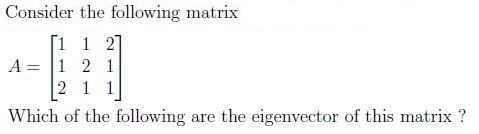
- For a matrix , eigenvectors satisfy .
- Example: For , possible eigenvectors are column vectors like .
Hessian Matrix
- For a function , the Hessian is:
- Example: For , the Hessian at is:
2. Probability & Statistics
Expectation & Linearity
- For random variables and :
- Example: Given and , solve for , then .
Probability Density Functions (PDF)
- For a PDF , the total probability integrates to 1:
- Example: For where , solve for :
- Probability Calculation:
Joint PDF & Transformations
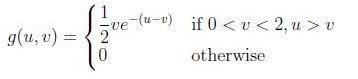
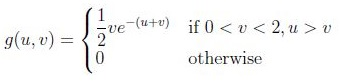
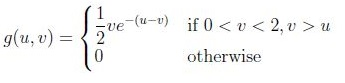
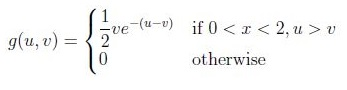
- For joint PDF , transform to , using the Jacobian :
- Example: For , , .
Maximum Likelihood Estimation (MLE)
- For exponential distribution , the MLE for given data is:
- Example: For lifetimes , .
3. Calculus & Optimization
Linear Approximation
- For , the linear approximation at is:
- Example: For at :
Gradient Descent
- Update rule for weights :
- Example: For , , and , compute .
Constrained Optimization
- Use Lagrange multipliers for constraints like .
- Example: Maximize under . The maximum occurs at , yielding .
4. Machine Learning
Mean Squared Error (MSE)
- For model and true where :
Linear Regression
- Gradient descent updates for in :
5. Geometry
Distance from Point to Plane
- For plane and point , the distance is:
- Example: For , , and , the distance is .
Graph 1: Linear Algebra Concepts
Graph 2: Probability & Statistics
Graph 3: Calculus & Optimization
Graph 4: Machine Learning
Graph 5: Geometry
Key Equations Summary
| Topic | Equation |
|---|---|
| Determinant of | |
| Expectation Linearity | |
| Linear Approximation | |
| MLE for Exponential | |
| Hessian Matrix | |
| Gradient Descent | |
| Plane Distance | |
| MSE |