Home / Past papers / MLF End Term / this paper
IIT M FOUNDATION AN EXAM ADF3 24 Dec 2023 - 24 Dec 2023
Elapsed 00:00
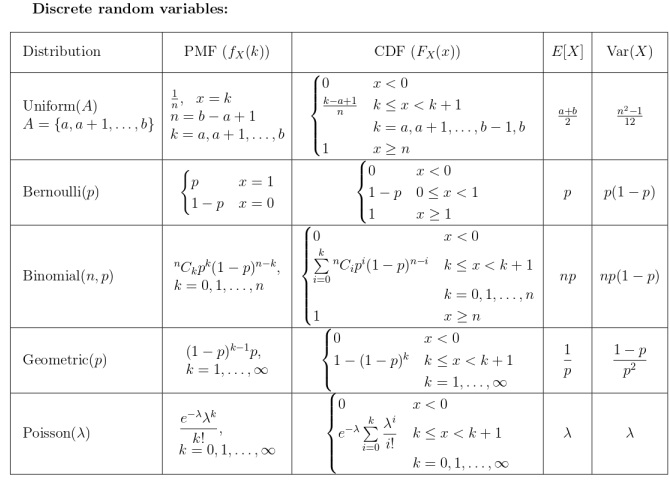
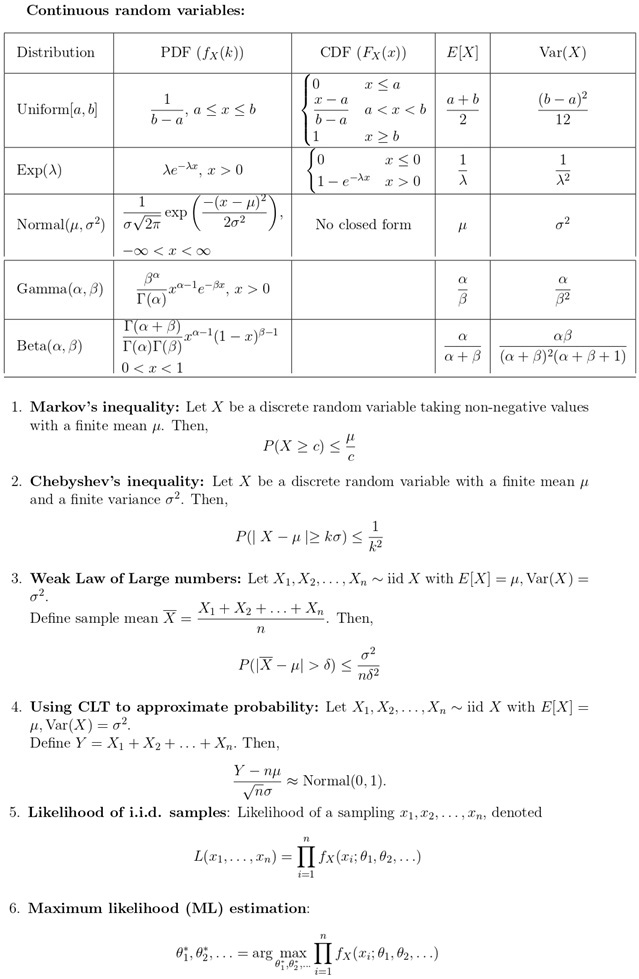
- Useful Data has been mentioned above.
- This data attachment is just for a reference & not for an evaluation.
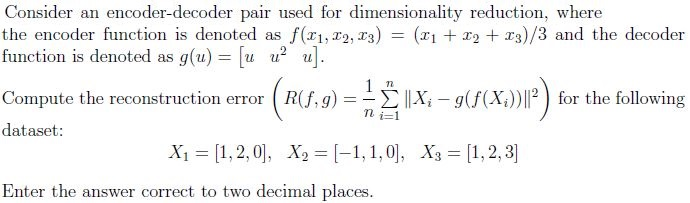





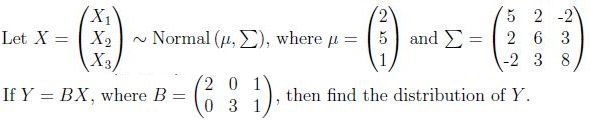
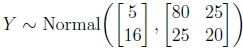
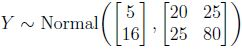
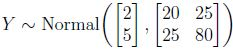
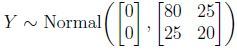





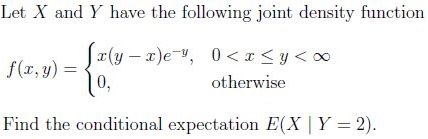

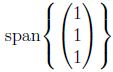

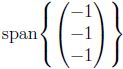
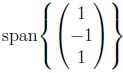
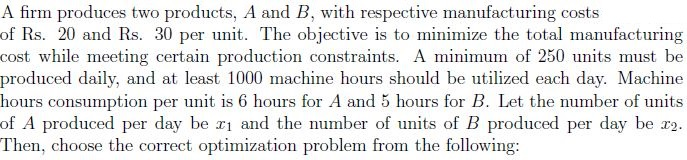
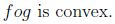
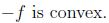
Which among the following statements are correct?
















Comprehension passage - the questions below it refer to this
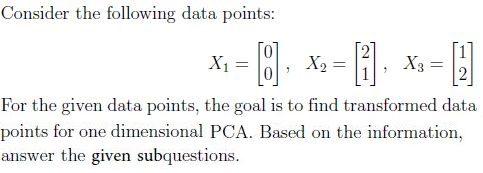
Which of the following represents the covariance matrix, C for the given data points?


What is the value of the projected variance?





Answer key
- Q1 (MCQ, 0 marks): A
- Q2 (SA, 3 marks): 3.31 to 3.35
- Q3 (SA, 3 marks): 0.5
- Q4 (SA, 3 marks): 0.480 to 0.490
- Q5 (MCQ, 3 marks): A
- Q6 (MCQ, 3 marks): B
- Q7 (MCQ, 3 marks): A
- Q8 (SA, 4 marks): 1
- Q9 (MCQ, 2 marks): B
- Q10 (MCQ, 2 marks): B
- Q11 (MCQ, 2 marks): D
- Q12 (MSQ, 3 marks): A, B, D
- Q13 (MSQ, 3 marks): B, C
- Q14 (MCQ, 2 marks): C
- Q15 (SA, 2 marks): 1
- Q16 (MSQ, 2 marks): A, B
Concepts this paper tests
Auto-generated summary from the source site. Handy as a checklist; the lessons above explain each idea from scratch.
Here’s a structured summary of core topics, concepts, principles, and equations for the exam, followed by Mermaid knowledge graphs to visualize relationships.
Core Topics & Concepts
1. Probability & Random Variables
Discrete Distributions
| Distribution | PMF () | Var() | |
|---|---|---|---|
| Uniform() | |||
| Bernoulli() | |||
| Binomial() | |||
| Geometric() | |||
| Poisson() |
Continuous Distributions
| Distribution | PDF () | Var() | |
|---|---|---|---|
| Uniform[] | |||
| Exponential() | |||
| Normal() | |||
| Gamma() |
Key Theorems & Inequalities
- Markov’s Inequality:
- Chebyshev’s Inequality:
- Weak Law of Large Numbers (WLLN):
- Central Limit Theorem (CLT):
- Maximum Likelihood Estimation (MLE):
2. Linear Algebra
Key Concepts
- Nullspace: Solutions to .
Eigenvalues & Eigenvectors:
- If is positive definite, and are also positive definite.
Convex Hull: Smallest convex set containing all points.
- Any convex combination (where ) lies in the convex hull.
Key Equations
- Linear Approximation (Multivariable):
- Covariance Matrix (for data points ):
PCA Projection:
- Project data onto the eigenvector of the largest eigenvalue of .
3. Optimization & Linear Programming
Key Concepts
- Objective Function: Minimize/maximize a linear/nonlinear function.
- Constraints: Inequalities/equalities restricting feasible solutions.
- Example (Linear Programming):
4. Dimensionality Reduction (Autoencoders & PCA)
Key Concepts
Encoder-Decoder Pair:
- Encoder: (compression).
- Decoder: (reconstruction).
- Reconstruction Error:
PCA:
- Find the direction (eigenvector) maximizing variance.
- Project data onto this direction.
5. Conditional Expectation & Joint Distributions
Key Equations
- Conditional Expectation:
Joint PDF/CDF:
- For independent : .
2. Linear Algebra & Optimization
3. Dimensionality Reduction
4. Conditional Probability & Expectation
Key Equations Summary
| Topic | Equation |
|---|---|
| Markov’s Inequality | |
| Chebyshev’s Inequality | |
| WLLN | |
| CLT | |
| MLE | |
| Linear Approximation | |
| Reconstruction Error | |
| PCA Variance | Maximize s.t. |
| Conditional Expectation |
Exam Tips
Probability:
- Memorize PMF/PDF, expectation, and variance for key distributions.
- Practice applying Markov/Chebyshev inequalities and CLT.
Linear Algebra:
- Understand eigenvalues, nullspace, and convex hulls.
- Know how to compute covariance matrices and PCA projections.
Optimization:
- Formulate LP problems correctly (objective + constraints).
- Recognize when to use MLE (e.g., estimating for Bernoulli).
Dimensionality Reduction:
- Compute reconstruction error for autoencoders.
- Derive PCA steps (covariance matrix → eigenvectors → projection).
Conditional Probability:
- Use joint PDFs to compute conditional expectations.
- Remember independence implies .