Home / Past papers / MLF Quiz 1 / this paper
IIT M FOUNDATION AN EXAM QDF2 26 Oct - 26 Oct 2025
- Regression
- Classification
- Clustering
- Dimensionality Reduction













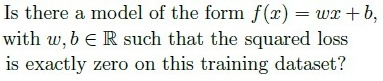
- No
- Yes
- Insufficient information to answer the question
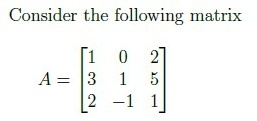
- {(1, 0, 2), (0, 1,−1)}
- {(1, 0, 2), (0, 1,−1), (0, 0,−1)}
- {(1, 0, 2), (0,−1, 1), (0,−1,−4)}
- {(0, 1,−1), (0, 0,−4)}
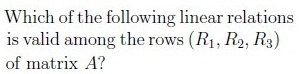



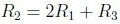
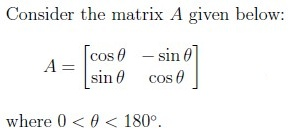
- A is an orthogonal matrix
- A is invertible
- A is symmetric
- A does not have real eigenvalues
- A has two distinct real eigenvalues
- A has two real eigenvalues, not necessarily distinct
- True
- False
- True
- False
- True
- False


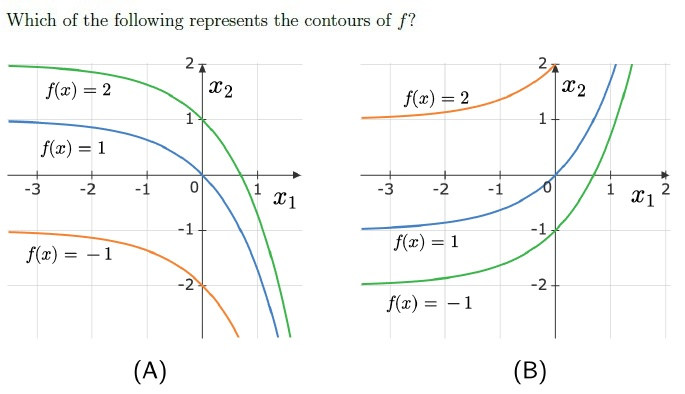
- (A)
- (B)
Answer key
- Q1 (MCQ, 1 marks): B
- Q2 (MCQ, 3 marks): A
- Q3 (MSQ, 2 marks): B, C, D
- Q4 (SA, 3 marks): 72
- Q5 (SA, 3 marks): 1024
- Q6 (SA, 2 marks): 0
- Q7 (MCQ, 3 marks): A
- Q8 (MCQ, 2 marks): A
- Q9 (MCQ, 3 marks): B
- Q10 (MCQ, 2 marks): C
- Q11 (MSQ, 2 marks): A, B
- Q12 (MCQ, 3 marks): A
- Q13 (MCQ, 2 marks): B
- Q14 (MCQ, 1 marks): A
- Q15 (MCQ, 2 marks): B
- Q16 (MCQ, 2 marks): A
- Q17 (SA, 2 marks): 1
- Q18 (MCQ, 2 marks): A
Concepts this paper tests
Auto-generated summary from the source site. Handy as a checklist; the lessons above explain each idea from scratch.
Here’s a structured summary of core topics, concepts, principles, and equations for the "Diploma Level: Machine Learning Foundations" exam, along with Mermaid knowledge graphs to visualize relationships.
1. Core Topics & Concepts
A. Machine Learning Basics
Supervised Learning
Classification (e.g., loan approval:
Yes/Nobased on features like income, credit score).- Algorithms: Logistic Regression, Decision Trees, SVM, k-NN.
Regression (predicting continuous values, e.g., house prices).
- Algorithms: Linear Regression, Polynomial Regression.
Loss Functions:
- Squared Loss (MSE): (used in regression).
- Log Loss (Cross-Entropy): Used in classification.
Unsupervised Learning
Clustering (e.g., customer segmentation).
- Algorithms: k-Means, Hierarchical Clustering.
- Dimensionality Reduction (e.g., PCA, t-SNE).
Model Evaluation
- Overfitting/Underfitting.
- Train-Test Split, Cross-Validation.
B. Linear Algebra (Critical for ML)
Matrices & Vectors
- Row Space: Span of the rows of a matrix .
Basis: Linearly independent vectors that span a space.
- Example: For , a basis for the row space is
{(1,0,2), (0,1,-1), (0,0,-1)}.
- Example: For , a basis for the row space is
- Rank: Number of linearly independent rows/columns.
Matrix Properties
- Orthogonal Matrix: (columns are orthonormal).
- Invertible Matrix: , .
- Symmetric Matrix: .
Eigenvalues/Eigenvectors:
- .
- Real Symmetric Matrices: Always have real eigenvalues.
- Diagonalizable Matrix: (requires linearly independent eigenvectors, not necessarily distinct eigenvalues).
Special Matrices
- Positive Definite: All eigenvalues > 0.
- Singular Matrix: (non-invertible).
C. Calculus & Optimization (For ML Models)
Gradient Descent:
- Update rule: .
- Used to minimize loss functions (e.g., MSE, Log Loss).
Partial Derivatives:
- Critical for computing gradients in multivariate functions.
D. Probability & Statistics (For ML)
Probability Distributions:
- Gaussian (Normal), Bernoulli, Binomial.
Bayes’ Theorem:
- .
Maximum Likelihood Estimation (MLE):
- Finds parameters that maximize the likelihood of observed data.
2. Key Equations
| Topic | Equation | Notes |
|---|---|---|
| Linear Regression | : weights, : bias. | |
| Squared Loss | Used in regression. | |
| Log Loss | Used in classification. | |
| Gradient Descent | : learning rate. | |
| Eigenvalue Equation | : eigenvalue, : eigenvector. | |
| Matrix Inverse | Only if . | |
| Orthogonal Matrix | Columns are orthonormal. | |
| Determinant | ⇒ Singular (non-invertible). |
Graph 2: Linear Algebra Concepts
Graph 3: Optimization in ML
Graph 4: Probability & Statistics
4. Exam Tips
Classification vs. Regression:
- Use classification for discrete outputs (e.g.,
Yes/No). - Use regression for continuous outputs (e.g., house price).
- Use classification for discrete outputs (e.g.,
Linear Algebra:
- A matrix is invertible iff .
- A matrix is orthogonal iff .
- Real symmetric matrices always have real eigenvalues.
- Diagonalizable ≠ n distinct eigenvalues (only needs linearly independent eigenvectors).
Basis & Row Space:
- A basis must be linearly independent and span the space.
- Example: For , the row space basis is
{(1,0,2), (0,1,-1)}.
Eigenvalues:
- If a matrix has complex eigenvalues, it’s not diagonalizable over the reals.
- Symmetric matrices are always diagonalizable.
Gradient Descent:
- Smaller learning rate () ⇒ slower convergence.
- Too large ⇒ divergence.
True/False Questions:
- "Diagonalizable ⇒ Invertible"? False (e.g., zero matrix is diagonalizable but singular).
- "Real symmetric ⇒ real eigenvalues"? True.
- "n distinct eigenvalues ⇒ diagonalizable"? True, but the converse is false.